
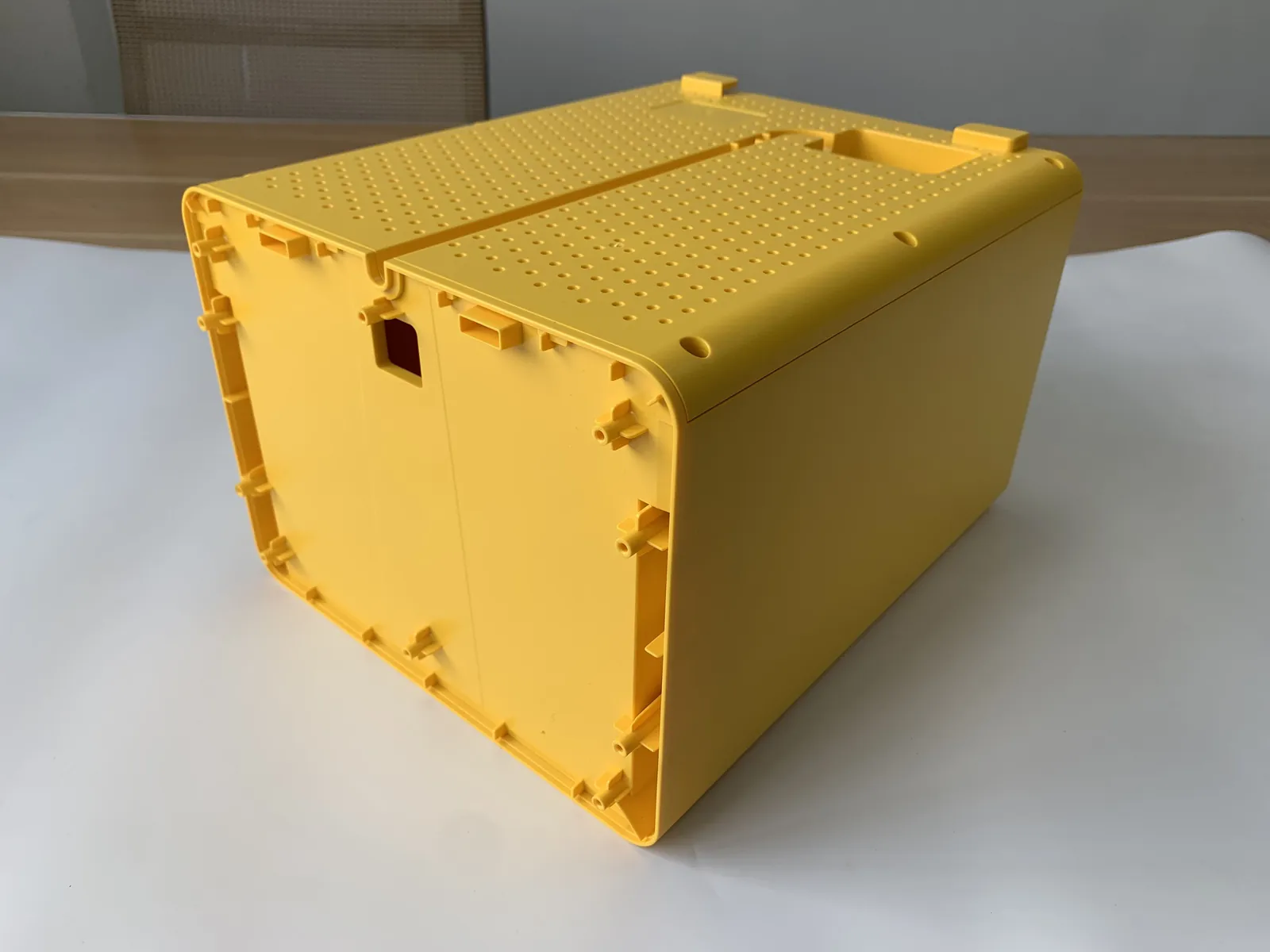
Weld line tests on PP with 20 percent glass measured 28.1 MPa across the seam against 52.3 MPa without one, a 46.3 percent drop recorded in a 2025 peer-reviewed study. Raising injection pressure added only 1.5 MPa at the seam. This article shows which levers actually move weld line strength and what to write in your RFQ.
Buyers ask us about weld lines more often than almost any other moulding defect, and the questions usually arrive after a first article has already shown a visible line. There is still plenty of confusion about what that line means for the part, not just for its looks.
One camp treats the line as a cosmetic blemish to be polished, textured or relocated. The other camp treats every visible line as grounds to reject the trial and restart the tooling review. Both camps quote experience. Neither quotes measurements.
But here is the conflict we keep running into: the most requested “fix” on the moulding floor is more injection pressure, and the published measurements show pressure barely moves the number at the seam. Something else decides weld line strength, and it gets decided long before the first shot.
We set out to answer four questions:
- How much strength does a weld line actually cost, measured rather than estimated?
- Why does glass fibre make the seam so much weaker than the base resin?
- Which process changes move the retention number, and which only cost cycle time?
- Where does this belong in your RFQ so the seam lands in a harmless place?
In one sentence: peer-reviewed moulding tests put PP-GF20 at 28.1 MPa across the seam versus 52.3 MPa in clear material, a 46.3 percent cut that injection pressure from 2.5 to 12.5 MPa recovered by only 1.5 MPa, while a 2 to 8 mm band of parallel-lying fibres explains why the joint stays weak. Gate position, not the pressure setting, is the lever that decides where that band lands.
Key takeaways
- 46.3% tensile drop: PP with 20% glass fibre measured 28.1 MPa across a weld line against 52.3 MPa without one, both at 210 °C melt temperature.
- Pressure is the wrong lever: raising injection pressure from 2.5 to 12.5 MPa lifted seam tensile strength by only 1.5 MPa, from 27.5 to 29.0 MPa.
- 2–8 mm weak zone: in glass-filled PP the fibres within a 2–8 mm band lie parallel to the seam, so nothing bridges the joint.
- Temperature splits the verdict: the weld factor for flexural strength rose from 0.52 to 0.61 between 190 and 230 °C, while the tensile factor stayed flat at 0.53–0.55.
- Gating decides early: gate position sets where the seam lands; moving one gate can carry the seam out of a load path entirely.
Methodology
This article compiles published laboratory measurements rather than in-house tensile trials, and it labels every figure by its source. The primary dataset comes from an open-access 2025 study in Polymers on glass fibre reinforced polypropylene, which we verified in full text through Europe PMC. A second point of comparison comes from a 2025 Polymer Composites study on 30% glass filled PP, checked at abstract level. One widely quoted range from the trade press, attributed to injection moulding consultant John Bozzelli, is carried as a secondary source and marked as industry-reported.
We separate shop facts from study facts. Shop facts here cover our own equipment and trial practice: 11 injection presses from 80 to 450 T, 5 CNC machining centres, EDM and grinding in-house, and bridge CMM inspection in a dedicated metrology room. The laboratory numbers belong to their authors, and we do not claim them as our own measurements.
What does a weld line actually cost in strength?
The cleanest measured answer comes from the Polymers study, which moulded PP with 20 percent short glass fibre both with and without a seam and pulled the specimens apart under ASTM D638 conditions. Here are the paired values.
| Property (PP-GF20, 210 °C melt) | With weld line | Without weld line | Difference |
|---|---|---|---|
| Tensile strength | 28.1 MPa | 52.3 MPa | −46.3% |
| Flexural strength | 40.2 MPa | 74.6 MPa | −46.1% |
| Flexural retention factor | 0.54 of bulk | — | |
Read that as one number: the seam leaves roughly half the strength in place. Skip the weld line in a load path and the part keeps its full rating. Put a load-bearing rib or a snap feature on the seam and the rating halves before service loads even start.
For context on the base materials, the same study lists neat PP at 32 MPa tensile and PP with 30 percent glass at 61.4 MPa under ASTM D638, with 120 MPa flexural for the filled grade. Reinforcement raises bulk strength, but it does the opposite at the seam.
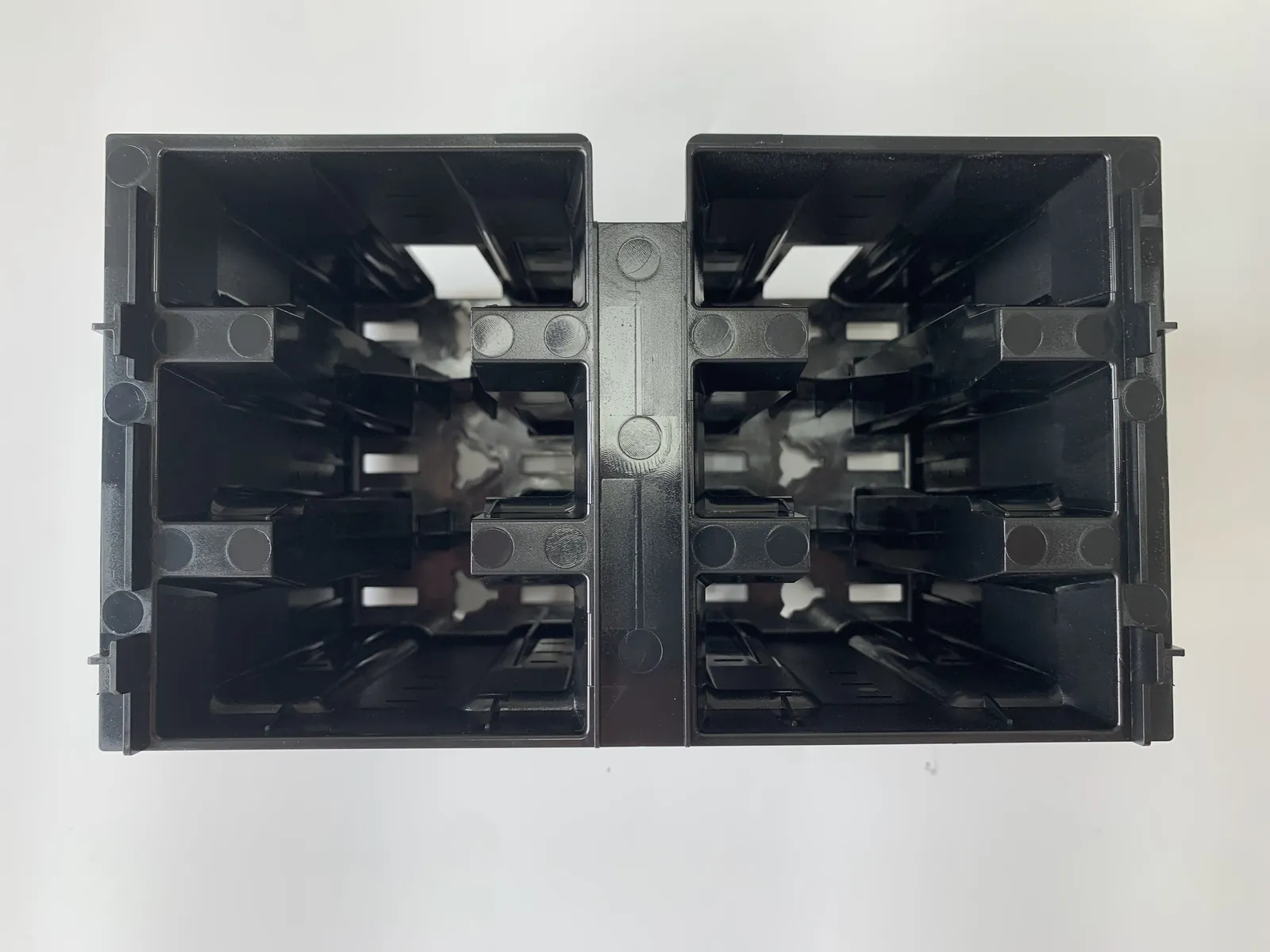
A 1+1 family cavity splits the flow into two mirrored fronts. Each housing carries its own seam where those fronts rejoin.
Why does glass fibre make the seam weaker?
The mechanism is geometry, not chemistry. Two melt fronts meet and stop. Molecules in an unfilled resin can still diffuse across the interface and tangle, so the seam heals reasonably well. Fibres cannot diffuse. They freeze in place, oriented by the flow.
Work cited within the Polymers paper attributes the classic observation to Fisa: in glass-filled PP, a band 2 to 8 mm wide around the seam ends up full of fibres lying parallel to the joint plane. A rope with all its strands lying along the knot holds nothing. Strength in that band then depends almost entirely on how much fibre made it across, which is close to none.
Supplier guidance says the same thing in different words. A SABIC LNP processing note, as quoted in the trade press, warns that fibrous reinforcement oriented parallel to the weld line can cause dramatic loss of strength in the seam area. John Bozzelli, writing in Plastics Technology, put the honest spread at 20 percent to nearly 100 percent of base strength depending on the material. Treat that spread as industry-reported rather than a promise.
Which process levers move the number?
The Polymers study tested the two levers moulders reach for first, and the results split cleanly. Temperature helped one property. Pressure helped almost nothing.
| Lever | Range tested | Effect at the seam | Source |
|---|---|---|---|
| Injection temperature (tensile) | 190 → 230 °C | Retention factor flat at 0.53–0.55 | Polymers 2025 |
| Injection temperature (flexural) | 190 → 230 °C | Retention factor 0.52 → 0.61 | Polymers 2025 |
| Injection pressure (tensile) | 2.5 → 12.5 MPa | 27.5 → 29.0 MPa (+1.5 MPa) | Polymers 2025 |
| Mould temperature (30% GF/PP) | 120 °C optimum in RSM model | Largest single influence on seam strength | Polymer Composites 2025 |
Two short conclusions follow. Raise the mould or melt temperature for a cosmetic seam on a flexural part. Stop paying for pressure when the target is seam tensile strength.
But this doesn’t tell the entire picture. The study used one fibre length, one resin system and specimen-sized parts. Production parts with thick sections, long flow paths or hygroscopic resins can shift these ratios, and the Polymer Composites study showed parameter interactions that a single-factor table cannot capture.
Where should the weld line sit in your part?
If the seam cannot be removed, and on any part with a hole or more than one gate it cannot, then position is everything. A seam crossing a corner, a snap leg or a screw boss carries load it cannot hold. The same seam across a flat non-cosmetic panel is harmless and free.
This is decided at the gating review, months before steel is cut. When we review a drawing with flow-splitting features, we mark where the fronts will meet, check the predicted seam against the load paths in the drawing, and where the seam lands badly we move the gate or add an overflow well instead of promising process fixes later. On the press floor, short shots during trials confirm the prediction, venting at the meeting point keeps the line from burning, and the first article goes through bridge CMM inspection before anything ships. From a 40 g connector to a 1.2 kg housing, the same review order applies.
Three things are worth writing into your RFQ. First, name the load paths, because they decide where the seam may land. Second, state the resin and filler percentage, because the retention number depends on it. Third, ask where the supplier expects the seams and what the trial will show, because a supplier who can answer has already thought about gating.
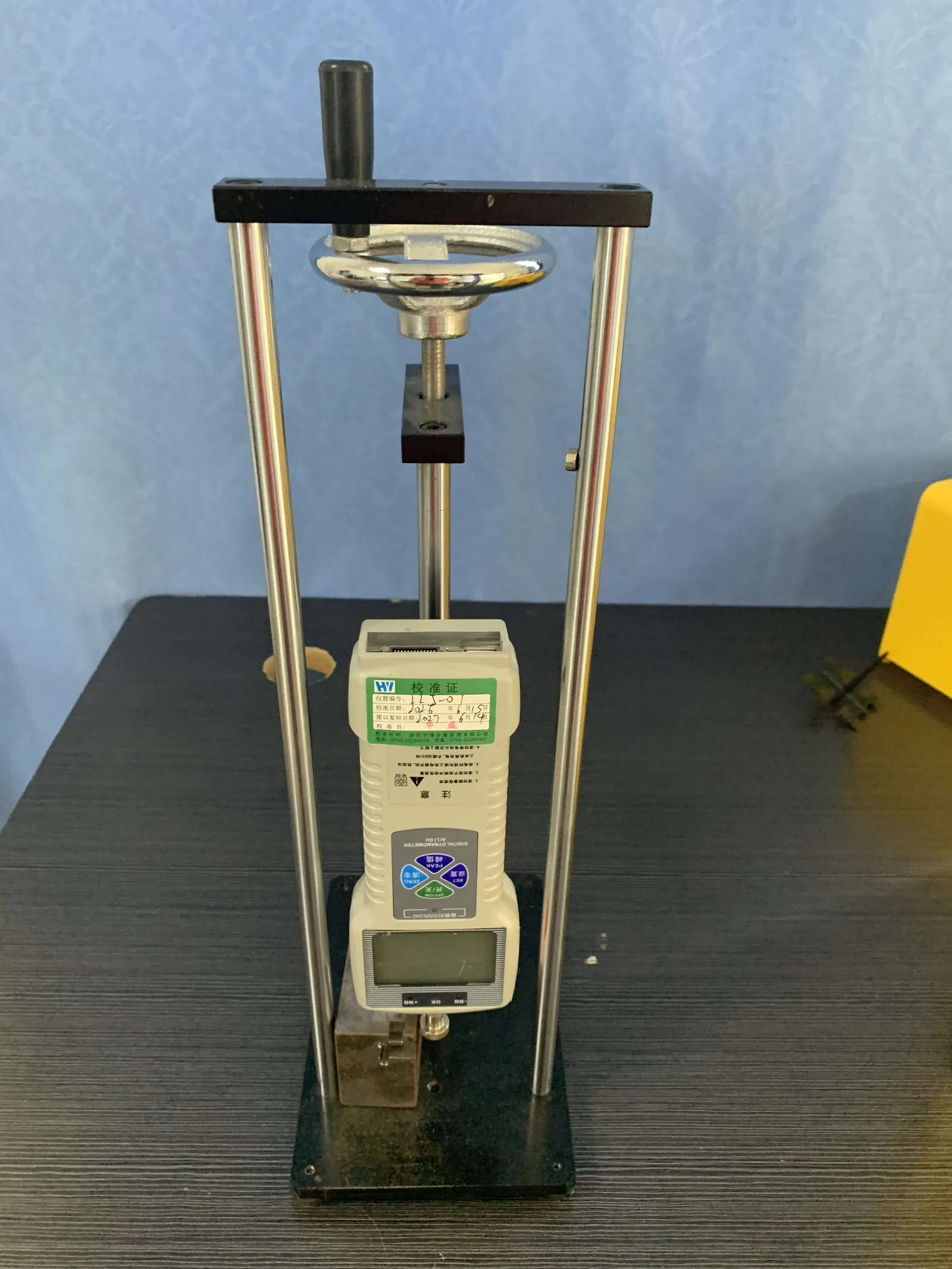
A bench tester and a CMM report turn a seam argument into a measurement. Put the load paths in the RFQ and the trial shows the rest.
Limitations
Test conditions differ from production. The measured values come from laboratory specimens moulded on calibrated equipment at controlled temperatures, with one resin system and one fibre length. A production part sees different flow lengths, holding times and cooling, so treat the retention percentages as anchors for magnitude, not guarantees for your geometry.
Third-party sources carry their own limits. The Bozzelli range and the SABIC wording reached us through trade-press aggregation because the original pages were not reachable at writing time, and the Polymer Composites study was checked at abstract level only. None of these figures were measured in our shop, and we have no in-house weld line tensile data to add.
What this means for your RFQ
My take is simple: a weld line is a design decision wearing a defect costume. The measured data says the seam costs about half the strength in glass-filled PP, that pressure tuning will not buy it back, and that gate position plus resin choice set the outcome before the tool is built. Buyers who put load paths and filler content in the RFQ get the seam moved for free. Buyers who discover it at first article pay for a tooling change.
We help procurement teams turn drawings full of flow-splitting features into a gating plan that puts seams where they are harmless, and we quote the tooling that follows from it. Send your 3D file to sales@hongqiangmould.com and you will have a quotation with the weld line positions marked within 24 hours. Marked | Measured | Moulded.
Frequently asked questions
Does every part with a hole get a weld line? Yes. The melt splits around the core pin and rejoins downstream, so a seam forms downstream of every hole, slot and window. A part fed from more than one gate also gains a seam between each pair of gates. The only parts without seams are simple shapes filled from a single gate with nothing to split the flow.
How much strength does an unfilled resin keep at the seam? The trade-press range runs from about 20 percent to nearly 100 percent of base strength, with unreinforced materials sitting at the healthy end of that spread. Unfilled PP typically loses 10 to 20 percent. Glass-filled grades lose far more because fibres lie along the joint instead of bridging it, so ask for the retention figure for your exact resin and filler level.
Does raising melt temperature fix weld line strength? Partially, and only for some properties. In the cited measurements, raising injection temperature from 190 to 230 °C lifted the flexural retention factor from 0.52 to 0.61, yet the tensile factor stayed flat at 0.53 to 0.55. Hotter fronts fuse better for bending loads but do not restore tensile strength, and higher mould temperature mattered more than barrel settings in the 30% GF study.
What should I include in an RFQ about weld lines? Three items make the difference. Name the functional load paths so the gates can be placed to steer seams away from them. State the resin grade and filler percentage, because retention depends directly on both. Ask the supplier to mark expected seam positions on the drawing, and to confirm what the trial shots will demonstrate before the tool ships.
Jack works on the tooling and molding team at Hongqiang Mould, an injection mould manufacturer and plastic injection molding supplier. The shop runs 11 presses from 80 to 450 T, 5 CNC machining centres and a metrology room with bridge CMM inspection.