
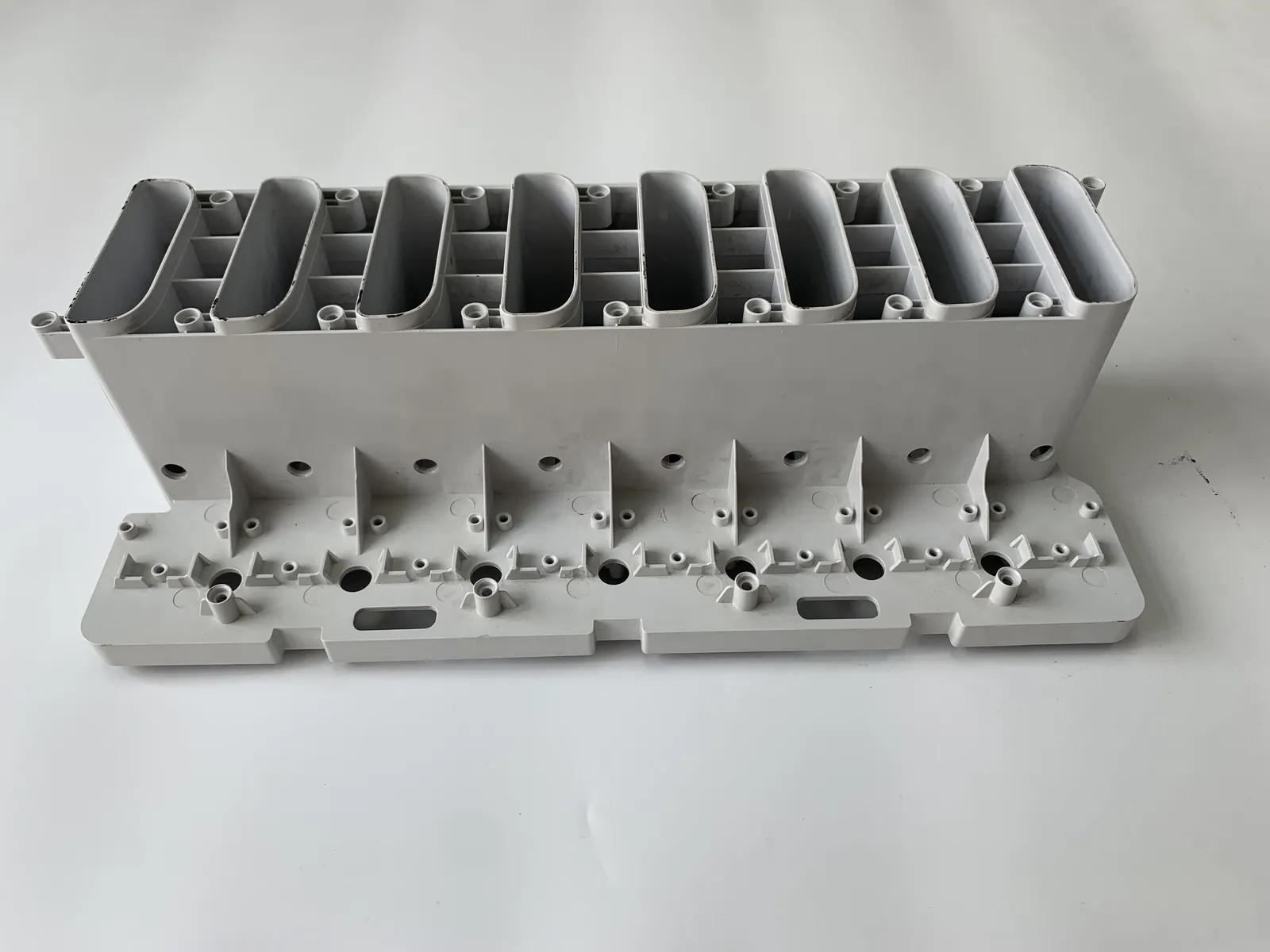
In a cold runner tool, the sprue and runner must stiffen before the mould can open and eject. Nobody buys that plastic, and nobody ships it. It still decides when the press opens.
One camp treats a hot runner as a premium accessory for packaging plants. The other treats it as an admission that the cold feed system was designed badly. Both camps argue about tooling price, rarely about the cycle sheet.
The cycle sheet tells a quieter story. On many thin-wall programs, the part is solid long before the sprue is. MouldMaking Technology puts it plainly: in many production lines, cycle time is limited by the time the sprue takes to cool.
Three questions guided this piece:
- Why does a feed system that gets scrapped set the shot time?
- How much of the cycle comes back when the runner leaves?
- Where does that trade hurt, and when does it pay off?
In one sentence: an 8 mm branch carries a 16x cooling index against a 2 mm wall, so a cold feed system can hold the cycle hostage; a hot runner removes that ceiling and supplier trials credit it with up to 20% shorter cycles, while peer-reviewed work on fibre-reinforced PP counters with up to 20% tensile strength lost. Volume, resin value and regrind policy decide which side of the ledger wins.
Key takeaways
- Cycle ceiling: cooling time scales with the square of section thickness, so an 8 mm branch carries a 16x cooling index against a 2 mm wall.
- Sprue rule: trade press reports that many thin-wall lines wait for the sprue, not the part, before opening the mould.
- Peer review: on one two-cavity mould run both ways, the hot runner side reached higher shot weights at lower injection pressure (ABS and PP, Demirer 2007).
- Supplier lab: the pin-less STARgate hot runner is credited with up to 20% shorter cycles and 17% lighter parts versus conventional valve-gate layouts.
- Quality check: the same hot runners cost up to 20% tensile strength on fibre-reinforced PP against a cold runner reference (Zarges 2023).
- Buyer math: material savings alone repay the premium almost never; cycle time, resin value and regrind bans decide.
Methodology
Four kinds of sources feed this piece, and none of them is a laboratory we own. Two are peer-reviewed studies: Demirer, Soydan and Kapti ran ABS and PP through one two-cavity mould built for both runner systems, and Zarges and co-workers compared open and valve-gate hot runners against a cold runner reference on cellulose-fibre PP. Two are trade articles in MoldMaking Technology, one on sprue cooling and one on hot runner gains.
Supplier figures come from Oerlikon HRSflow material around Fakuma 2026, read through two independent trade reports rather than the press release alone. The cooling index table below is our own arithmetic from the published square-law rule for one-dimensional cooling, already used on this blog for wall thickness. Shop facts cover an 11-press moulding floor rated 80 to 450 T, with mould design, machining, trials and CMM inspection under one roof.
No cycle time was measured on our floor for this comparison. Where a number is a supplier claim or a lab result, the text says so.
Why does plastic nobody keeps decide the shot time?
In a cold runner mould, the feed channels live in the same cooled steel as the part. Every shot fills part, sprue and runner together, and all of it freezes together. Before the mould opens, the sprue must be stiff enough to eject without distorting or sticking, or the sprue picker jams.
The runner is usually the thickest piece of polymer in the shot, because it has to stay open long enough to feed several cavities. MouldMaking Technology states this directly: it is common for the runner to carry a thicker section than the moulded part. The same article lists the hidden time bill: filling the cold runner, a longer mould-open stroke to clear the tree, then degating, trimming and sorting.
The square law turns those thickness gaps into time gaps. Cooling time scales with the square of section thickness, as our piece on cooling channel design and cycle time showed for part walls. The comparison below uses an effective slab thickness equal to the runner diameter. That treats the branch as a slab, which is conservative, because a cylinder sheds heat faster than a slab of the same diameter.
| Runner branch diameter | Cooling index, 2 mm part wall = 1.00 |
|---|---|
| 4 mm | 4x |
| 6 mm | 9x |
| 8 mm | 16x |
| 10 mm | 25x |
An 8 mm branch carries a 16x index. Nobody waits for a full freeze. The tax is every second between a solid part and a stiff sprue.
But the index is a ceiling, not a quote. Real branches taper, junctions run hotter, and partially frozen polymer can still eject cleanly on many programs.
How much cycle comes back when the runner leaves?
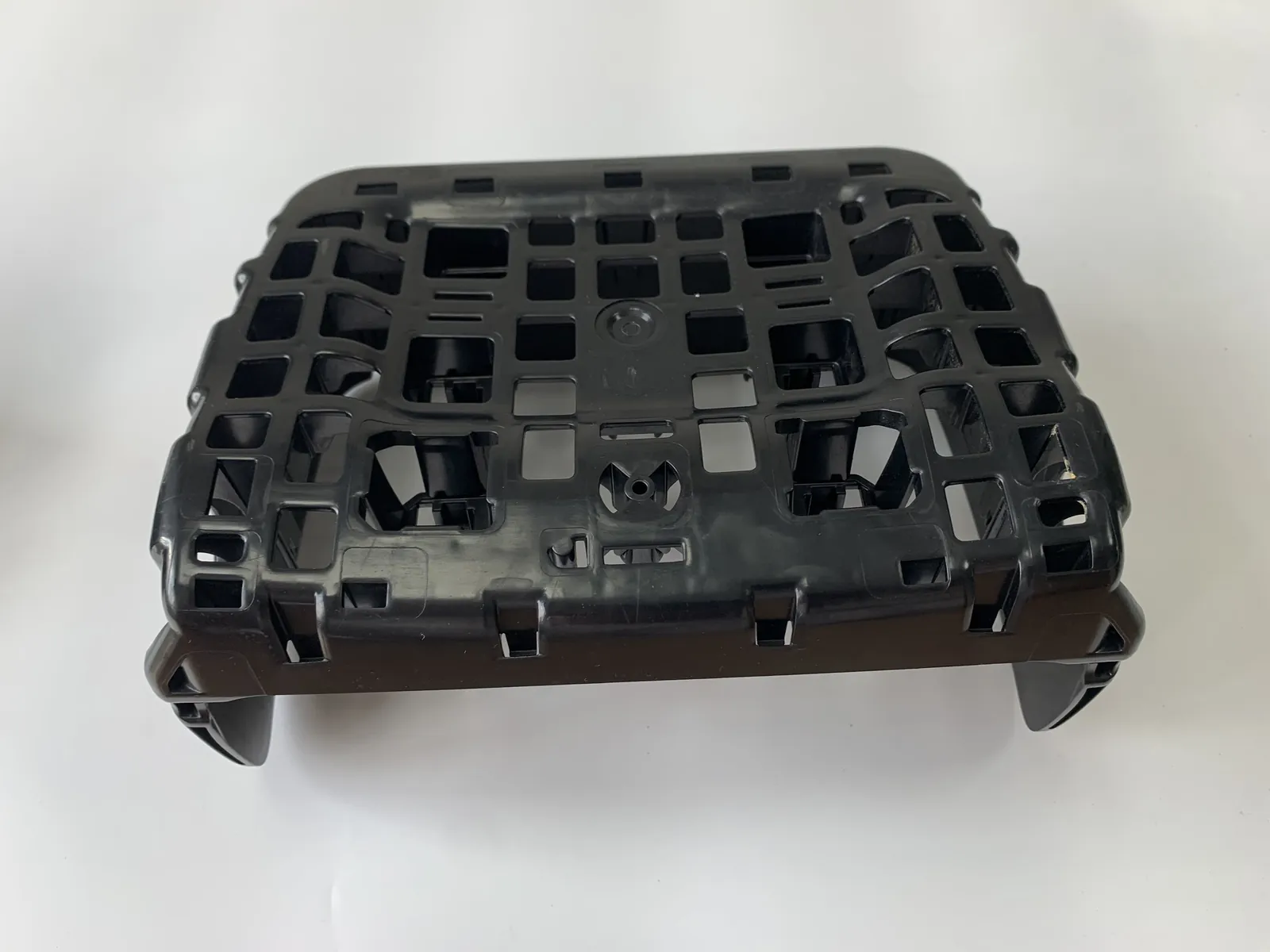
A hot runner keeps the feed system molten up to the gate, so nothing in the shot needs to freeze except the part. The recovery arrives on four fronts at once. Cooling drops by the difference between the runner and the part. Injection shortens, because no melt is spent filling cold steel. The mould-open stroke shrinks without a tree to clear. Degating and runner sorting disappear from the labour sheet.
The peer-reviewed comparison agrees on the pressure side. Demirer and co-workers built one two-cavity mould that ran with either system and held cycle time constant across tests. With the hot runner fitted, the same ABS and PP filled to higher shot weights at considerably lower injection pressure. Lower pressure often means a smaller clamp, sometimes a smaller press.
Supplier claims push further. Oerlikon HRSflow presented its pin-less STARgate system at Fakuma 2026 with the numbers below, reported by two trade outlets.
| STARgate HRS, supplier-reported figures | Value |
|---|---|
| Cycle time vs conventional systems | up to 20% shorter, application dependent |
| Part weight in R&D centre trials | up to 17% lighter |
| Shot weight range | 40 g to 2.5 kg |
| Resins qualified beyond PP | PMMA, ABS, PS, HDPE, LDPE, filled grades |
| Live demo, Flow Beyond 2026 | 41 g r-PP bucket, 4.7 s cycle, 2 cavities |
Those figures come from the system maker through its own test centre. The 4.7 s bucket ran live with partners, so at least one press saw it.
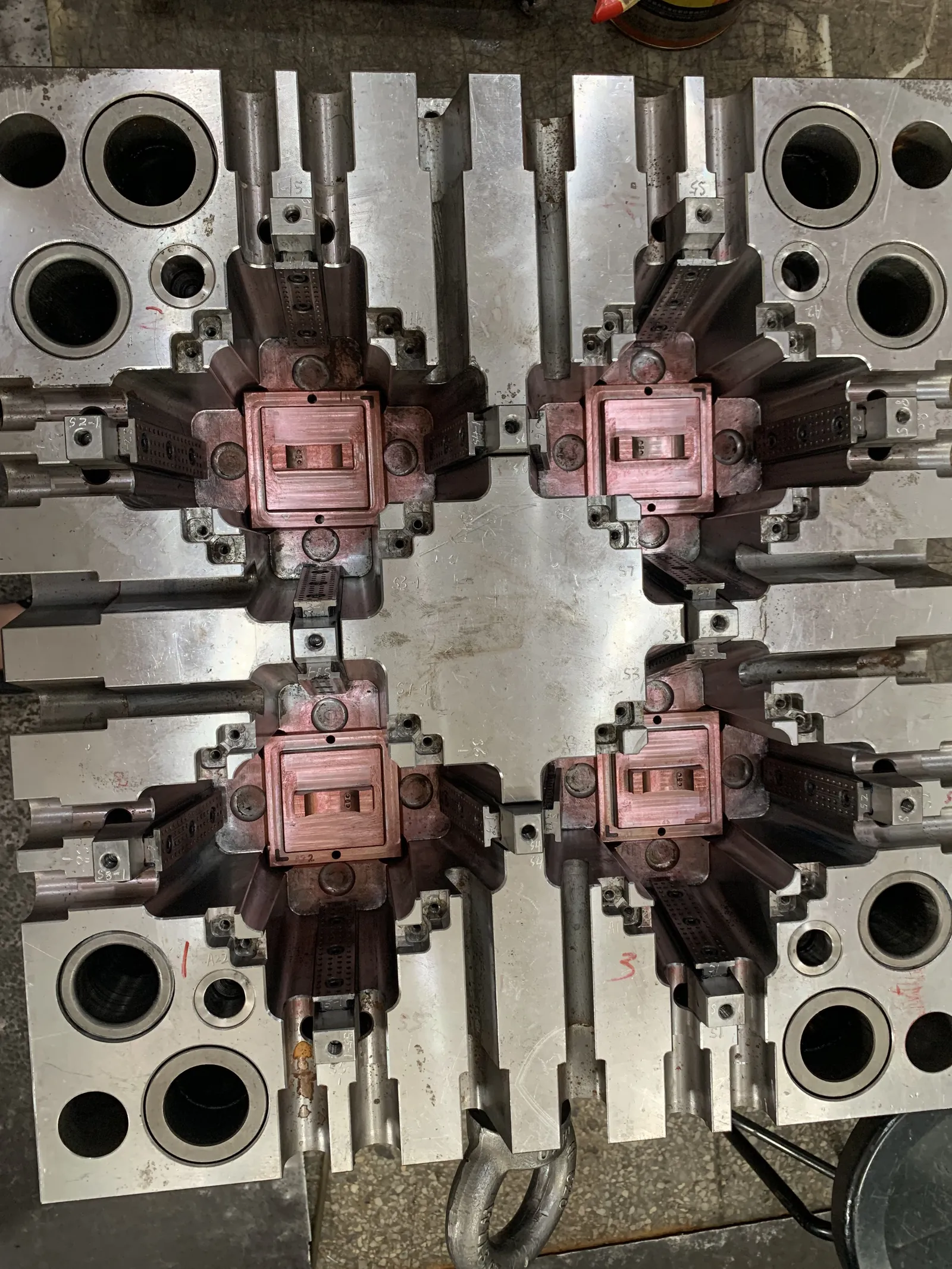
But a 20% claim on a packaging line says little about a 30 s technical part. Big parts already spend most of their cycle cooling the wall, so the runner tax shrinks with part size.
What does holding melt hot change inside the part?
Melt that sits in a heated manifold keeps accumulating thermal history. For commodity PP and ABS that is usually a non-event. For heat-sensitive stocks such as PVC or POM, long residence brings discoloration and corrosive breakdown, which is why those resins get special designs or stay on cold runners.
The Zarges study puts numbers on the mechanical side. Regenerated-cellulose-fibre PP processed through open and valve-gate hot runners landed up to 20% below the cold runner reference in tensile strength. Median glass-fibre length dropped about 20%, cellulose fibre about 5%. The valve-gate layout kept more fibre length than the open nozzle, so gate hardware matters as much as the decision itself.
Demirer adds a caution on dimensions: shrinkage and warpage rose with process temperature and fell with injection pressure in both systems. A hot runner widens the low-pressure window, which helps, yet the balance still needs trials on the real resin.
None of this makes hot runners bad. It makes them a trade: cycle and resin saved against property loss and thermal care on fibre-filled stocks.
When does the trade pay off for a buyer?
On our floor, the runner cross-section is locked at the 2D mould-base stage, before electrode machining starts. A branch can be opened later; shrinking one means re-cutting steel. The cycle consequence is signed off in the drawing office, months before a press sees resin.
Our published runner-weight tables show why material alone rarely settles it. A 6 mm branch 120 mm long weighs about 3 g in PP, roughly $4.60 per thousand shots at a $1.50/kg example price. Against a five-figure system premium, payback by resin savings alone runs into millions of shots. Cycle time, resin value and regrind bans are what move the crossover, as our earlier costing of cold runner weight concluded.
The factors below decide which way a program should lean.
| Decision factor | What it moves |
|---|---|
| Annual volume and shift pattern | how many times the runner tax repeats per year |
| Resin price per kg | amplifies savings on scrap and the cost of property loss |
| Regrind policy | virgin-only programs gain a second reason to drop the runner |
| Colour change frequency | manifold purge scales with melt volume held hot |
| Resin thermal window | PVC and POM need special designs, industry-typical |
| Maintenance skills on site | heaters, seals and thermocouples need trained hands |
High volume with stable colour leans hot. Short runs, frequent changes and heat-sensitive resins lean cold. Programs in between deserve a quote built both ways before the steel is cut.
Limitations
Lab conditions are not your line. Demirer held cycle time constant by design, so it isolates pressure, not cycle savings. Zarges tested standard coupons on one material family. The cooling index treats a round branch as a slab, which overstates the wait, and the square-law formula itself assumes a flat plate between two constant-temperature walls. The STARgate percentages are supplier figures from the makers own centre and one live demo, not an independent audit.
Third-party data carries its own caveats. Trade articles were verified through archived snapshots because publisher sites block direct access from our network. Supplier numbers reached us through two independent trade reports, and both agree on the figures quoted. Resin behaviour shifts between grades, so treat every range here as a starting point for a moulding trial, never as a production setting.
What this means for your RFQ
We help project engineers settle the runner question before steel is cut, with both layouts quoted and the cycle math shown. Send the part, the resin, the annual volume and the colour plan. The runner decision lands in the drawing, not in a trial.
In our 80 to 450 T shop, cold-runner and hot-runner tools share the same design, machining and CMM inspection route. From first article to series tool, the feed system is a costing line, not a surprise. Email your runner sketch to info@hongqiangmould.com and our quotation lands in your inbox within 24 hours.
Balanced | Buildable | On Schedule
Frequently asked questions
Does the runner really need to freeze before the mould opens? It needs to be stiff enough to eject without distortion or sticking, not fully cold. Trade articles on sprue cooling report that many production lines, especially thin-wall ones, wait for the sprue rather than the part. The wait between a solid part and a stiff branch is the runner tax.
How much cycle time can a hot runner save? The supplier of the pin-less STARgate system reports up to 20% versus conventional systems, application dependent. Independent trade analysis points in the same direction because the runner is usually the thickest section in the shot. The saving is largest on small, high-cavitation parts and smallest where the part wall already dominates cooling.
Do hot runners change part strength? They can, mostly on fibre-filled resins. One peer-reviewed study on fibre-reinforced PP measured up to 20% lower tensile strength through hot runners against a cold runner reference, with valve-gate layouts losing less than open nozzles. Unfilled commodity stocks showed no such penalty in the same literature.
When should a cold runner stay? Stay cold for short or uncertain volumes, frequent colour or material changes, heat-sensitive resins such as PVC and POM, and tight tooling budgets. Every shot clears the flow path, so changeovers cost minutes instead of manifold purges. A three-plate tool with automatic degating is often the middle path.
Jack works on the tooling and molding team at Hongqiang Mould, a mould shop in China that builds injection moulds and runs production moulding on 11 presses from 80 to 450 T. He writes about the numbers behind tooling decisions: clamp force, cooling, ejection and the tolerance stack that decides whether a part assembles.