
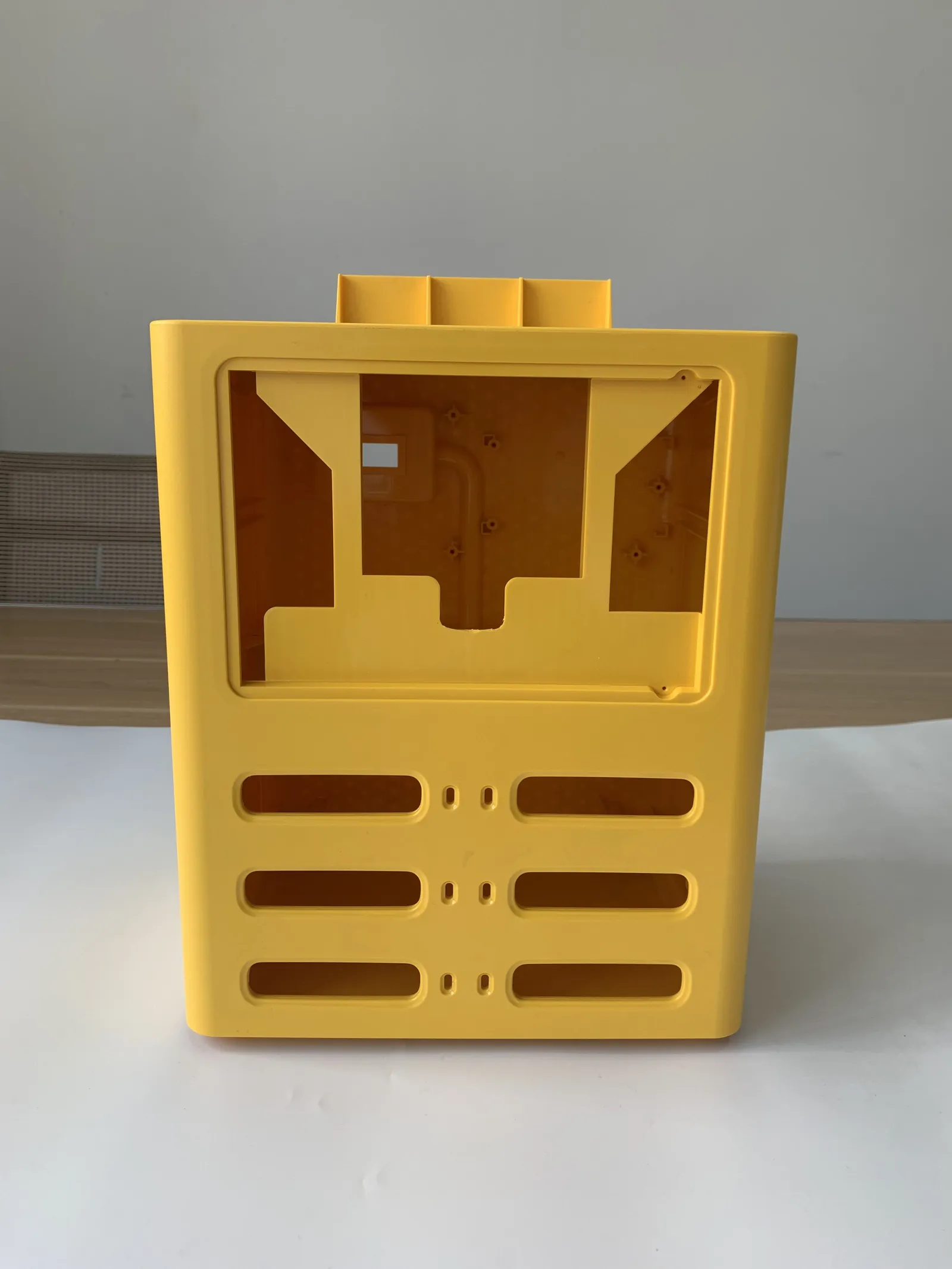
We help brand owners lock colour down before the cavity is cut. A 2% masterbatch dose is a starting point, not a colour spec: the carrier, the pigment heat rating and the press decide the shade, while the ΔE limit and the light source decide whether anyone signs it off.
A buyer writes “natural, matched to Pantone 425 C, 2% masterbatch” on a drawing and expects one colour at the end of the chain.
One camp treats the percentage as the specification. Set 2%, get 2%, get the approved shade. The other camp ignores the number and sends a physical plaque, expecting the moulder to match it by eye and by experience.
Both camps fail at the same place. The 2% is a dosing instruction. The colour is a measurement result. Nobody wrote down the conditions under which the measurement gets taken.
Four questions guided this review:
- Why does an unchanged 2% dose produce two shades on two machines?
- Which ΔE number belongs on a drawing, and in which formula?
- How much masterbatch does 1,000 parts actually consume?
- What has to be fixed in the RFQ before steel is cut?
The short answer: the dose sets the pigment load, and the specification has to set the measurement.
Colour in one paragraph
Masterbatch is pigment pre-dispersed in a carrier at 20-50% loading, then diluted into the base resin at the press. A 30% concentrate let down at 1:50 delivers 0.59% pigment in the part, not 30%. Published starting ratios sit at 1-3% for most coloured products, 1-2% for ordinary colour in polyolefin pipe and 4-6.5% for black grades that carry UV protection. The numbers that decide acceptance are separate: a colour difference limit, the equation used to compute it, the illuminant and the observer. Miss the second group and two suppliers measure the same part, get different ΔE values, and both claim they are right.
Key takeaways
- Dose is a range: 1-3% masterbatch covers most coloured products; black UV grades run 4-6.5%
- Pigment maths: a 30% concentrate at 1:50 gives 0.59% pigment in the part
- Carrier first: a PE carrier suits PP and PE; in PA or PC it can spot, streak or delaminate
- ΔE needs units: ΔE*ab 1.0 and ΔE00 1.0 are different limits, so name the equation and D65/10°
- Cost per 1,000: a 100 g part at 2% consumes 2.0 kg of masterbatch per 1,000 shots
Methodology
Four documents sit behind this piece. One is an industry paper on mixing and compounding masterbatches, written in 1999 and still quoted for its carrier list and its 1-3% norm. One is a 2016 supplier article in a trade magazine that separates black concentrate ratios from colour ratios. One is a current pigment supplier guide with a ratio table by polymer and colour depth. The fourth is ASTM D2244, the standard practice for computing colour differences from instrument readings.
I want the sourcing limit stated plainly. None of these documents is a controlled trial on injection moulded appearance parts. Two are written by suppliers with a commercial interest in higher dosing. The standard defines how to calculate a colour difference, and it defines no acceptance value at all.
Our shop supplies the boundary conditions, not the data. Eleven presses run from 80 to 450 T, and the resin list is PP, PE, ABS, PC and PA. No spectrophotometer reading from our floor appears in the tables below, and I make no claim that we hold colour measurement data.
Why does the same 2% dose give two different colours?
Five variables move the shade while the percentage on the sheet stays put. Three of them live in the material, two in the machine.
| Variable | What it changes | Typical result |
|---|---|---|
| Carrier mismatch | whether the pellet melts into the base resin | spots, streaks or delamination in PA and PC |
| Pigment heat rating | whether the colour survives melt temperature | a 200 °C pigment at 280 °C decomposes into brown specks |
| Pigment concentration | how much pigment a given dose delivers | 30% at 1:50 gives 0.59%; 15% at 1:50 gives 0.30% |
| Shot-to-barrel ratio | residence time and mixing energy | a small shot in a large barrel drifts yellow over a run |
| Dosing method | the percentage actually delivered | volumetric feeders wander; gravimetric feeders hold |
Material explains the first two rows. Mixing explains the rest.
A colour that shifts mid-run is a residence problem, not a pigment problem.
The press range makes this concrete. A 20 g part quoted on a 450 T machine and the same part quoted on an 80 T machine see different barrel occupancy, so the same 2% sits in the melt for a different length of time. That is why we pick the press while the price is being built, not after the order lands. Colour-critical parts get the machine choice locked in first.
Which ΔE limit belongs on the drawing?
A ΔE number without a formula and a light source is not a limit. It is a number that two laboratories can read differently and both defend.
| ΔE band | What an observer sees | Common commercial reading |
|---|---|---|
| 0 to 0.5 | no difference without instruments | tight cosmetic work, colour-critical exteriors |
| 0.5 to 1.0 | difference appears when samples touch | typical limit for visible plastic housings |
| 1.0 to 2.0 | trained observers catch it side by side | accepted where parts are not adjacent |
| 2.0 to 3.0 | visible without a reference piece | rework territory on a consumer product |
| above 3.0 | obvious across a room | reject |
Treat those bands as experience, not as a standard. ASTM D2244 fixes the calculation and leaves the acceptance value to the two parties.
Two traps sit inside the number. ΔE*ab and ΔE00 do not return the same value for the same pair. A 1.0 limit therefore means two things. Metamerism adds the second trap: a match that holds under D65 can fail under warm shop light.
Fix the measurement, then argue about the limit. Formula, illuminant, observer, instrument geometry, plaque thickness and surface texture all belong in the same sentence as the number.
How much masterbatch does 1,000 parts actually take?
Published starting points differ by polymer and by colour depth. They are starting points, and the supplier of the specific grade still has to confirm them.
| Material and process | Pastel or light | Standard | Vivid |
|---|---|---|---|
| PP, injection moulding | 0.5-1.0% | 1.0-2.0% | 2.0-4.0% |
| ABS, PC, PET | 0.5-1.0% | 1.0-2.0% | 2.0-3.0% |
| Black concentrate, polyolefin pipe | not listed | 4.0-6.5% | not listed |
| General colour, most products | 1% | 2% | 3% |
Black costs more concentrate than colour. UV protection sets that ratio, not appearance.
PE and PA are absent from the published table. Ask the masterbatch supplier for the grade, not for the polymer.
The consumption side is simple arithmetic once the dose is set. Multiply part weight by the ratio, then by the order quantity.
| Part weight | At 1% | At 2% | At 4% |
|---|---|---|---|
| 20 g | 0.2 kg | 0.4 kg | 0.8 kg |
| 100 g | 1.0 kg | 2.0 kg | 4.0 kg |
| 500 g | 5.0 kg | 10 kg | 20 kg |
Doubling the dose doubles the masterbatch bill. It does not double the colour depth.
Pastel shades often need less pigment than buyers assume, and heavy loading can hurt impact strength.
What should the RFQ fix before the mould is cut?
Colour decisions that arrive after the trial cost a second trial. The list below is cheap to fill in at the quotation stage.
| Field | Value to state |
|---|---|
| Base resin | exact grade and supplier, not the polymer family |
| Masterbatch carrier | carrier matched to that resin family |
| Let-down ratio | percentage of total blend by weight, with the basis written out |
| Dosing | gravimetric, held to plus or minus 0.1 to 0.2% |
| Colour limit | equation named, then value: dE*ab or dE00, 1.0 or 2.0 |
| Illuminant and observer | D65 with 10 degree observer most common |
| Instrument geometry | d/8, specular included or excluded, stated once |
| Plaque condition | thickness, texture and gloss of the approved piece |
| Approval lighting | the illuminant in the light booth, not daylight by habit |
| Reference sample | identifier, date, storage condition, retained per lot |
Ten fields, one page. Each one removes an argument later.
Free-issue masterbatch is a decision too: it moves the supply risk to the buyer and keeps the shade controlled.
Two of these fields touch the tool. Surface texture changes what an instrument reads, so the approved plaque and the cavity finish have to match. Light colours also show flow marks and specks that a dark part hides, which is why a colour change can surface a mould problem that was always there. We covered the contamination side of that in the black speck source guide.
Limitations
The ratios above come from polyolefin pipe, film and general compounding work. Injection moulding of a visible housing runs different shear, different residence and a hotter tool, so the real dose can land above or below the published band. A pipe ratio is a reference point, not a setting for a 2-cavity housing tool.
The three technical documents are supplier and industry guidance. None is peer reviewed, and the 1999 paper predates current pigment chemistry. The ΔE bands are cross-industry experience collected from testing practice, not a published limit, and ASTM D2244 defines the calculation only.
Colour also ages. Parts shift under UV and heat, and a plaque kept on a shelf for two years is not the same reference as one measured last month. Nothing in this review covers long-term colour stability, and no customer shade from our own order book is quoted here.
What this means for your RFQ
Colour only becomes a specification when the carrier, the pigment heat rating and the measurement conditions are written down together. That work belongs before the cavity is cut, not at the trial. A shade that repeats across eight cavities, two shifts and the second order a year later is the result of those three lines on a page.
Send the part drawing, the resin grade and the colour target. Drawings in, price out: 24 hours. Our tooling team raises the carrier question and the ΔE field while the tool is still a layout, on a press list that runs 80 to 450 T.
Specified | Measured | Documented.
Frequently asked questions
Is 2% masterbatch a standard dose? No. Two percent sits inside the common 1-3% band for coloured products, and that band covers ordinary shades only. Black grades with UV protection run 4-6.5%, pastel shades often run below 1%, and the masterbatch supplier sets the number for the specific grade, not the polymer.
Can a PE-carrier masterbatch run in PA or PC? Usually not without a check. A polyethylene carrier disperses well in PP and PE because the chemistry matches. In polyamide or polycarbonate it may fail to melt into the matrix, leaving spots, streaks or a delaminated surface. Ask for a carrier matched to the base resin and trial it before the run.
What ΔE should I put on a drawing? Start with 1.0 and name the equation, because ΔE*ab and ΔE00 give different numbers for the same pair. Add D65 and a 10 degree observer, plus the instrument geometry. Above 2.0 most buyers see the difference without a reference sample, which is why cosmetic parts usually stay at or below 1.0.
Does colour affect the mould itself? Two ways. Cavity texture and gloss change the instrument reading, so the approved plaque has to match the finish. Light colours also expose flow marks, weld lines and specks that a dark part conceals. Neither problem is caused by the pigment, and both surface at the first trial.
Jack works on the tooling and molding team at Hongqiang Mould, covering mould design, machining and trial support for export tooling programs.