

We help sourcing teams size each snap arm from the resin’s permissible strain, not a rule of thumb. PC holds 4% strain, PC/ABS 2.5%, and glass-filled grades drop to 2%. Friction and repeated use cut those numbers further, so the mould and the grade decide whether a lid stays closed.
Snap-fit arms look simple, yet they fail more often than almost any other moulded feature. A lid that will not close, or one that cracks on the third open, ships back as a defect.
One camp sizes the arm from a handbook strain of 1% and adds wall until it feels safe. The other trusts the moulder to make it snap and hopes for the best on the line.
Both camps miss the same number. The resin maker publishes the strain a snap joint can take, and almost nobody designs to it. The result is a part that is either over-thick or one pass from cracking.
Four questions guided the comparison:
- What strain can a snap arm take before it cracks?
- Why do friction and repeated use shrink that limit?
- How do we size a real arm from the numbers?
- Which resin should a buyer specify, and how does moulding change the limit?
Using Covestro’s snap-fit design guide, one worked example and a PA66 data sheet, we show the strain limit runs higher than assumed, but friction and repeated use eat it fast.
Across the five Covestro-listed grades, permissible short-term strain runs from 4.0% for unfilled PC down to 2.0% for 20% glass-filled PC; PC/ABS sits at 2.5% and the Makroblend PC blend at 3.5%. Friction on steel adds 0.20 to 0.65 to the mating-force math, and Covestro’s own guidance cuts every value to 60% when the joint is opened and closed often. A worked 19 mm PC hook therefore needs a 2% design strain, returns 32.5 N of deflection force and 58.5 N of mating force.
Key takeaways
- Strain beats wall: PC snap arms hold 4.0% strain, not the 1% many drawings assume when they add thickness.
- Glass cuts the slack: 20% glass-filled PC drops the limit to 2.0%, half of the unfilled grade’s allowance.
- Friction sets the force: coefficient on steel spans 0.20 (POM) to 0.65 (ABS), driving mating force upward.
- Repeat use trims 40%: Covestro guidance uses 60% of the single-use strain for lids opened often on the line.
- One worked hook: a 19 mm PC arm at 2% strain needs 32.5 N to deflect and 58.5 N to mate.
Methodology
We built this comparison from one primary design guide and two resin data sheets, then checked the figures against what our shop measures on the bench. Primary source: Covestro LLC, Snap-Fit Joints for Plastics — A Design Guide, Table 2 (allowable short-term strain) and Table 3 (friction on steel). Resin data: BASF Ultramid A3EG6 product data sheet, strain at break. Where a figure comes from the guide we label it as the publisher’s design guidance; where it comes from a data sheet we label it as the supplier’s published value. We did not run a tensile test for this article — the strain limits are the resin maker’s, not ours. The 19 mm hook is Covestro’s published worked example, reproduced with its own inputs rather than a part we moulded.
What strain can a snap arm take before it cracks?
The number that decides a snap arm is permissible short-term strain: how far the material can bend and spring back before it cracks. Covestro’s design guide lists values for its own materials at 23°C, and they sit far above the 1% figure many drawings still carry.
| Resin (Covestro guide) | Permissible short-term strain | Source |
|---|---|---|
| PC, Makrolon (unfilled) | 4.0% | Covestro Table 2 |
| PC blend, Makroblend | 3.5% | Covestro Table 2 |
| PC/ABS, Bayblend | 2.5% | Covestro Table 2 |
| PC, 10% glass | 2.2% | Covestro Table 2 |
| PC, 20% glass | 2.0% | Covestro Table 2 |
PC leads at 4.0% because the polymer yields before it breaks. Glass fill stiffens the arm and halves the allowance.
Why do friction and repeated use shrink that limit?
A snap arm that deflects easily is only half the story. The lid still has to slide over the hook, and the force to do that depends on friction between the two surfaces. Covestro’s Table 3 lists friction coefficients on steel, and the same logic applies between two plastic parts.
| Material | Friction coefficient on steel | Note |
|---|---|---|
| POM | 0.20–0.35 | low, easy slide |
| PP | 0.25–0.30 | low |
| PA (nylon) | 0.30–0.40 | rises when dry |
| PBT | 0.35–0.40 | moderate |
| PC | 0.45–0.55 | high against itself |
| ABS | 0.50–0.65 | highest of the set |
The values above are a selection from Covestro Table 3 for common housing resins. Higher friction means more force to close the lid. The 60% rule protects lids opened daily on the line.
Covestro states the Table 2 values are for a single joining operation. For frequent separation and rejoining, use about 60% of them. A lid that sees constant use must be sized to that lower strain, or the arm takes a set and the seal loosens.
How do we size a real arm from the numbers?
Covestro’s worked example sizes a cantilever hook in Makrolon PC. It shows how the strain limit, the arm geometry and the secant modulus turn into the forces a buyer feels when the lid closes.
| Input or result | Value |
|---|---|
| Material | Makrolon PC |
| Arm length | 19 mm |
| Arm width | 9.5 mm |
| Undercut | 2.4 mm |
| Hook angle | 30° |
| Permissible strain (Table 2) | 4.0% |
| Design strain (half) | 2.0% |
| Secant modulus at 2% | 1,815 N/mm² |
| Deflection force | 32.5 N (7.3 lb) |
| Mating force | 58.5 N (13.2 lb) |
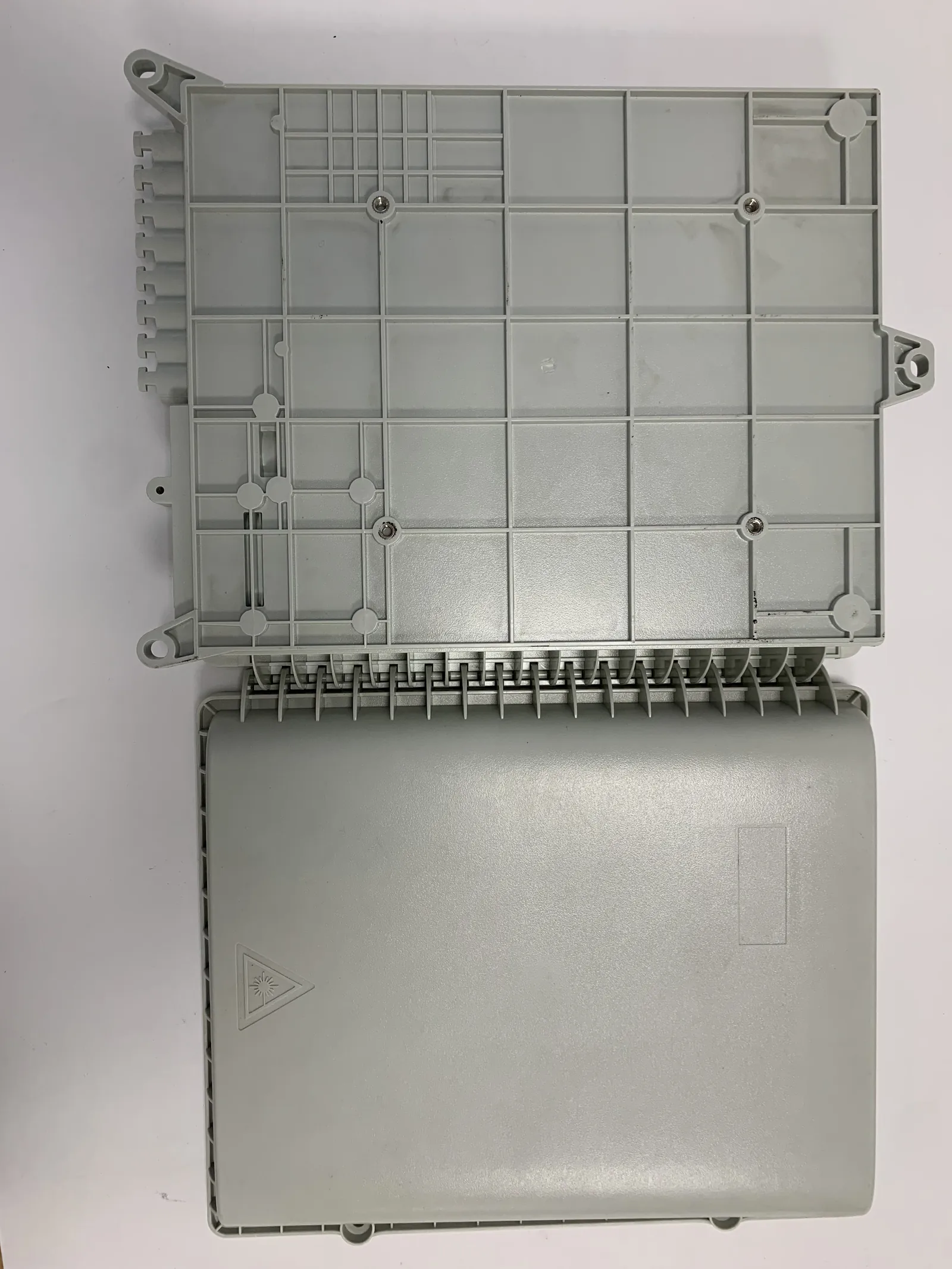
Half the permissible strain keeps a margin on every shot. The CMM confirms the arm thickness before we sign the tool.
Which resin should a buyer specify, and how does moulding change the limit?
Glass-filled nylon is a common choice for lids that must hold a tight seal, yet it is the hardest material to snap. BASF lists Ultramid A3EG6 (PA66, 30% glass) at 3% strain at break dry and 5% conditioned. That is elongation at break, a different metric from Covestro’s permissible snap strain, and the real snap allowance for a filled grade sits well below the unfilled PC value.
In our shop we run the first trial shot of a snap feature past the bridge CMM, because glass-filled grades throw the local modulus off the data sheet and a thin arm can crack at the first article. Moulding itself moves the limit three ways: a weld line through the arm can halve its real strain capacity, gate position sets the fibre orientation that stiffens or weakens the root, and wall thickness sets how large the arm can be for the same strain.
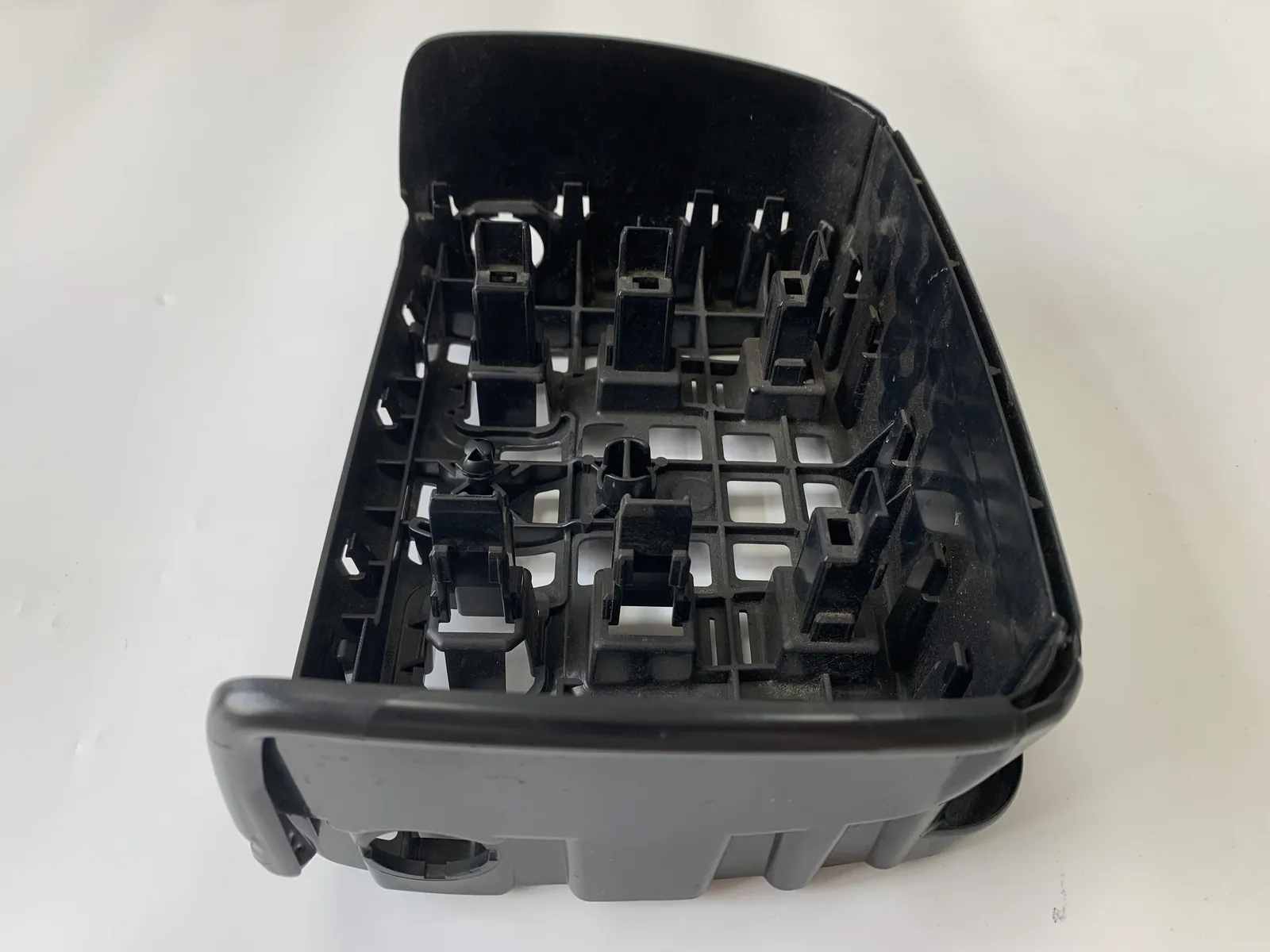
Pick the grade by the strain it can spare, not by price. A weld line through the arm can halve its real limit.
Limitations
A data-sheet strain is measured on a polished tensile bar, not on a 0.8 mm arm with a gate at one end. Real parts see flow marks, orientation and cooling gradients that the single number cannot capture.
Table 2 and Table 3 are Covestro’s design guidance for its own materials. Other suppliers publish different values, and we link each source we used so a buyer can check the original before committing a tool.
What this means for your RFQ
The strain number, not the wall thickness, is what keeps a lid closed. When the enquiry carries the grade and the snap geometry, the toolmaker can fix the strain limit, place the gate and avoid a weld line through the arm.
Send the resin grade and the snap geometry, and we quote within 24 hours. The CMM report travels with the first article so the arm is proven, not assumed. From first article to series tool, one shop runs the loop.
Sized | Trialled | Verified.
Frequently asked questions
What strain can a plastic snap-fit take? A snap arm in unfilled PC takes about 4% strain before it cracks, per the Covestro design guide. PC/ABS allows 2.5% and 20% glass-filled PC only 2.0%. The number comes from the resin maker, not from a fixed rule of thumb.
Why does my snap lid get loose after a few opens? Covestro guidance cuts the single-use strain to 60% for joints opened and closed often. A lid that sees daily use on the line must be sized to that lower value, or the arm takes a permanent set and the seal loosens.
Does glass-filled resin make a stronger snap? Glass fill raises stiffness but lowers the strain a part can take. A 20% glass PC arm allows only 2.0% strain against 4.0% for unfilled PC. The arm holds shape better yet breaks sooner if it is bent too far.
How do I specify a snap-fit on a mould RFQ? Send the resin grade, the arm length and the undercut, plus the open-close cycle the part will see. With those in hand the toolmaker can fix the strain limit, set the gate and quote within 24 hours. Drawings alone leave the limit open.
Jack works on the tooling and molding team at Hongqiang Mould, a mould shop in China that builds injection moulds and runs production moulding on 11 presses from 80 to 450 T. He writes about the numbers behind tooling decisions: clamp force, cooling, ejection and the tolerance stack that decides whether a part assembles.