
By Jack, tooling and molding team, Hongqiang Mould | 2026-10-23 | 8 min read
Mold flow analysis is a decision tool, and in 2026 the math behind it has changed. A resin increase of $0.50 per part becomes $0.70 once a 40% duty applies, and Chinese modified-resin producers raised prices by 1,500 to 2,500 yuan per tonne in the first half of October. Every scrapped shot and every re-machined insert now costs more than it did a year ago. Simulation earns its line item where those costs land: multi-gate parts, cosmetic surfaces, tight-tolerance housings and anything with slides or lifters. For a simple single-gate part in an unfilled resin, a structured DFM review usually covers the same ground.
Key takeaways
- A $0.50 supplier price increase turns into $0.70 per part under a 40% tariff, because the duty is charged on the higher base — the same compounding applies to scrap and rework.
- As of October 2026, most Chinese plastic parts entering the US carry normal duty plus 37.5% in stacked Section 301 tariffs, against 10% for Indian parts.
- October 2026 price notices from Chinese compounders list increases of 1,500 yuan/t on modified ABS, PS and PC, 2,000 on PP, PA66 and PBT, and 2,500 on modified PA6; ABS spot sat near 11,900 yuan/t, up about 2,900 year on year.
- At PTXPO 2026 in March, simulation and DFM dominated the show floor under a first-time-right banner, with AI-assisted solvers promising instant filling, pressure and temperature estimates.
- Our own workflow returns a quotation inside 24 hours once your 2D or 3D files arrive, with DFM comments first and simulation reserved for the geometries where the table below says it pays; trials run on 11 presses from 80 to 450 T.
How we put this together
This article combines three kinds of material, labelled by source. The 2026 cost numbers come from published market commentary: a US resin distributor’s October market note, a China vs India sourcing comparison current to October 2026, and October price-notice reporting from the Chinese compounding trade. The trade-show observations come from MoldMaking Technology’s floor reports on PTXPO 2026. None of these were measured in our shop.
Shop facts cover our own practice: we quote within 24 hours of receiving drawings, DFM comments on draft, wall, rib, gate and ejection go out with every quotation, and filling, packing, warpage and weld-line simulation is offered on the engineering page for parts where those risks matter. Trials and sampling run on our 11 presses from 80 to 450 T, with 5 CNC machining centres, EDM and grinding in-house and bridge CMM inspection behind them. The decision table in this article is our editorial judgment, marked as such — it is not a published study result.
What changed in the 2026 cost math?
Two outside forces raised the price of getting a part wrong. First, tariffs. A sourcing guide current to October 2026 puts most Chinese plastic parts at normal duty plus 37.5% in stacked Section 301 tariffs, against 10% for equivalent Indian parts. The compounding effect matters as much as the rate: a supplier that raises its price by $0.50 on a $1.00 part under a 40% duty moves the landed cost from $1.40 to $2.10, so the buyer pays $0.70 for a $0.50 increase. The same multiplier applies to every defective shipment.
Second, resin. In the first half of October, multiple Chinese compounders issued price notices: modified PA6 up 2,500 yuan per tonne, modified PP, PA66 and PBT up 2,000, modified ABS, PS and PC up 1,500. ABS spot prices stood near 11,900 yuan per tonne on 14 October, about 2,900 higher than a year earlier, and PA6 had risen roughly 5,800 year on year. A US distributor’s October note adds that tariffs are hitting molders’ orders on finished plastic goods and that imported moulds and machinery are also costing more.
| 2026 cost lever | Published move | Effect on the price of a defect |
|---|---|---|
| US Section 301 stacking | Normal duty + 37.5% on most Chinese plastic parts (vs +10% from India) | Each scrapped or reworked shipment crosses the border at the multiplied value |
| Tariff compounding | $0.50 increase on a $1.00 part at 40% duty = $0.70 landed increase | Supplier-side and scrap-side costs both get multiplied |
| October resin notices (China) | +1,500 to +2,500 yuan/t by resin family; ABS near 11,900 yuan/t (+2,900 YoY) | Every wasted shot and every trial purge costs more per kilogram |
| Freight and energy backdrop | US diesel at record highs in September; imported moulds and machinery costing more | Rushing replacement parts by air gets more expensive too |
Read the table as one sentence: the penalty for discovering a filling problem after the steel is hardened went up on three axes at once — duty, resin and freight. Simulation exists to move those discoveries upstream, where the fix is a moved gate on a screen rather than a welded and re-cut insert.
When does simulation earn its line item?
The honest answer is that it depends on geometry, and the dependency is predictable. At PTXPO 2026, the exhibits that drew crowds addressed exactly the failure modes simulation predicts best: vacuum venting sold against air traps and warpage, hybrid-mesh filling and packing solvers, and an AI-assisted solver trained on decades of simulation runs that returns instant filling, pressure and temperature estimates. The industry phrase of the show was first-time-right — spend the analysis before the first chip is cut, not after the first short shot.
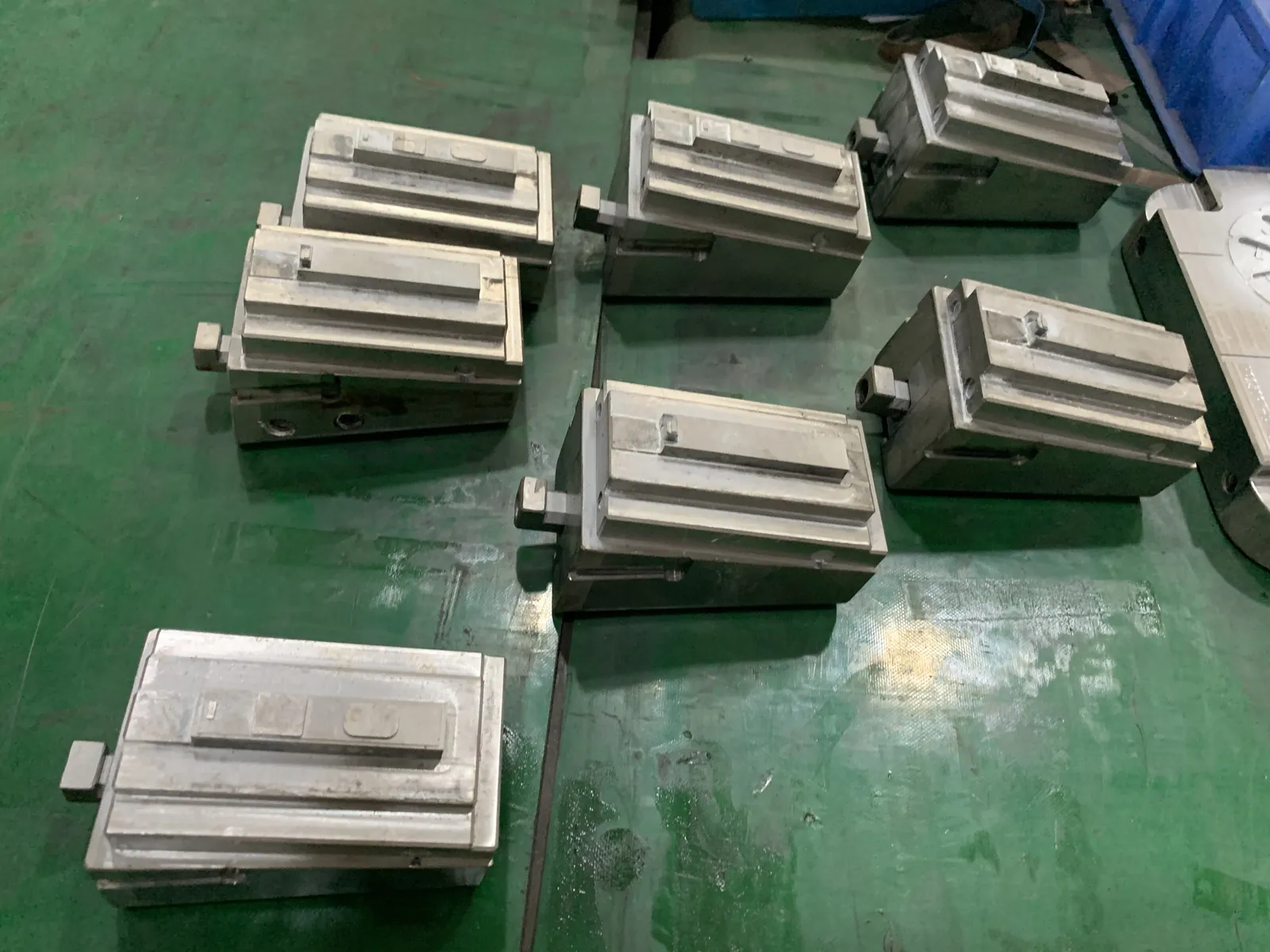
Every slider and lifter on that plate is a place where the melt changes direction, a place for a witness line, and a moving seal that must not flash. Geometry like this is where a filling study earns its fee: gate position decides which seams land on cosmetic faces, and packing behavior decides whether the rib opposite the gate sinks.
| Part situation | What simulation answers | Our judgment (editorial, not a study) |
|---|---|---|
| Multi-gate or family-cavity housings with cosmetic faces | Fill fronts, seam positions, air-trap risk | Order it — moving a gate on screen costs hours, in steel it costs weeks |
| Sliders, lifters, overmoulded inserts | Flow around cores, weld and hesitation lines, packing balance | Order it — the moving seals leave little room for trial-and-error |
| Tight-tolerance or flatness-critical parts | Warpage drivers: differential shrink, cooling asymmetry | Order it — warp shows up at CMM, after the mould is paid for |
| Thick-wall or variable-wall parts | Sink and void risk, packing pressure paths | Order it, or at minimum a packing-focused review |
| Simple single-gate part, unfilled resin, loose tolerance | Mostly confirms what experience already says | A structured DFM review usually covers it — spend the budget on a good gate decision instead |
The last row matters as much as the others. Simulation is a decision tool, not a certification stamp. A buyer who pays for analysis on a trivial geometry is buying a PDF, and a buyer who skips it on a four-slider cosmetic housing is gambling weeks of schedule on the first trial.
What can simulation not do?
It cannot test your real resin lot, your real water temperature, or the skill of the setter who hooks up the mould. Solver vendors are open about this: predictions of flow, packing and warpage are models, and their accuracy depends on material data quality and mesh decisions. The PTXPO exhibits that paired software with hardware — vacuum venting alongside flow consulting, vision systems alongside process monitoring — exist precisely because the model gets the part close and the trial closes the gap. At PTXPO 2026 the trend on the floor was instant AI-assisted estimates; treat those as triage for engineering attention, not as final answers. Resin flow data is the weakest link in that chain, and an MVR value without its test condition makes the run look more certain than it is.
That is why we keep simulation and physical trials in the same program: model the risky geometry first, cut the steel, then prove the prediction on one of our presses before the mould ships. A CMM report on first-article parts is the acceptance test for the simulation, not a substitute for it.
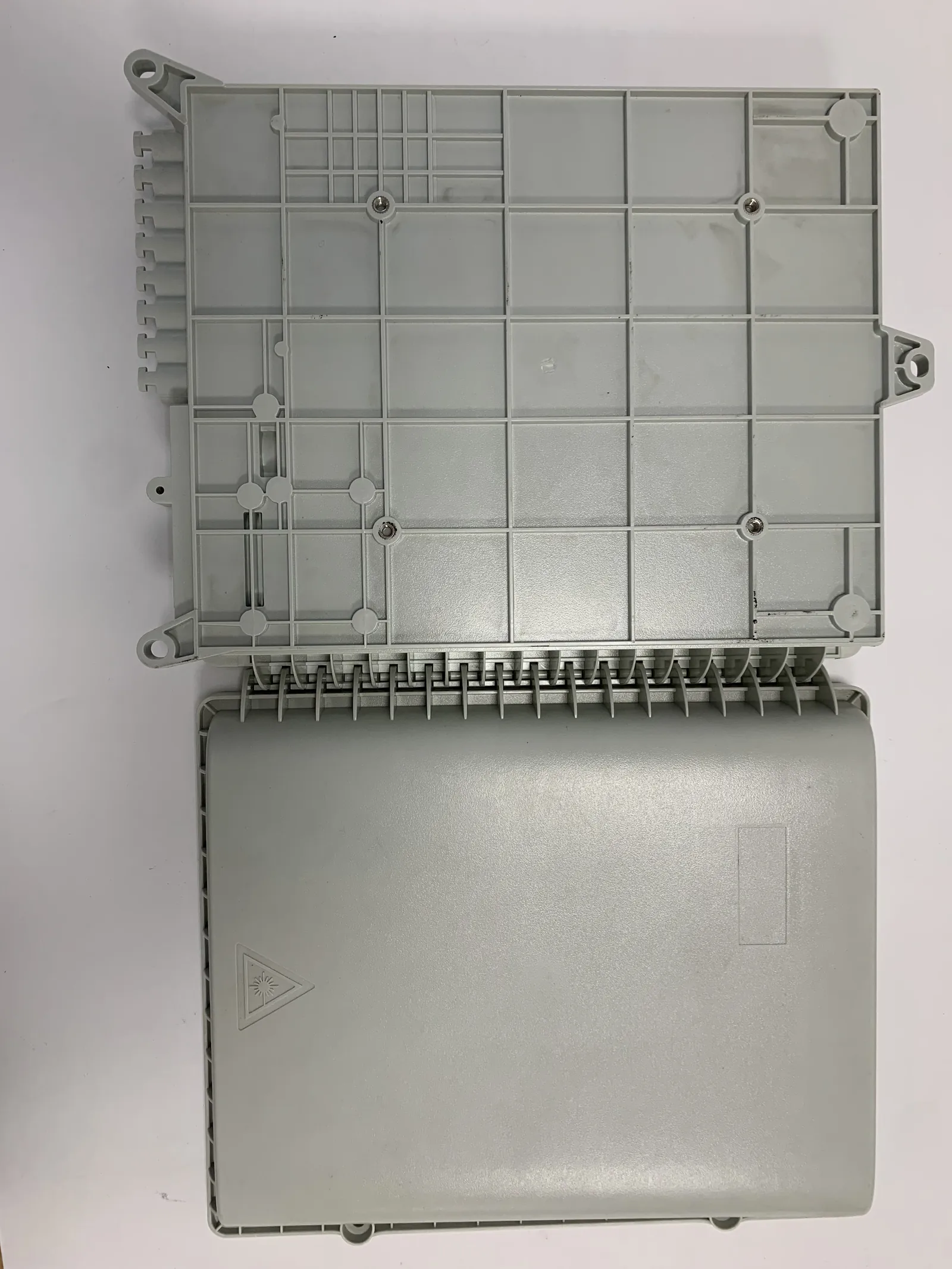
A two-part housing is the classic case. The witness line between these halves sits where the parting line and the gate decision put it. One screen-level gate change before tooling starts can move that line off the visible face; the same change after trials means welding, re-cutting and re-texturing steel.
How should the analysis be bought and scoped?
Ask three questions of any supplier offering the service. What deliverable do you get — a report with filling, packing, warpage and seam predictions, or a one-page screenshot? Which material data will the run use, since generic grades hide the fibre orientation and shrinkage behavior your resin will show? And what happens to the findings — do they turn into gate and cooling changes on the tool design, or into a paragraph in an email? We accept STEP and IGES for 3D data and DWG or DXF for 2D drawings, and our DFM comments come back with the quotation so the analysis feeds the tool design rather than trailing it.
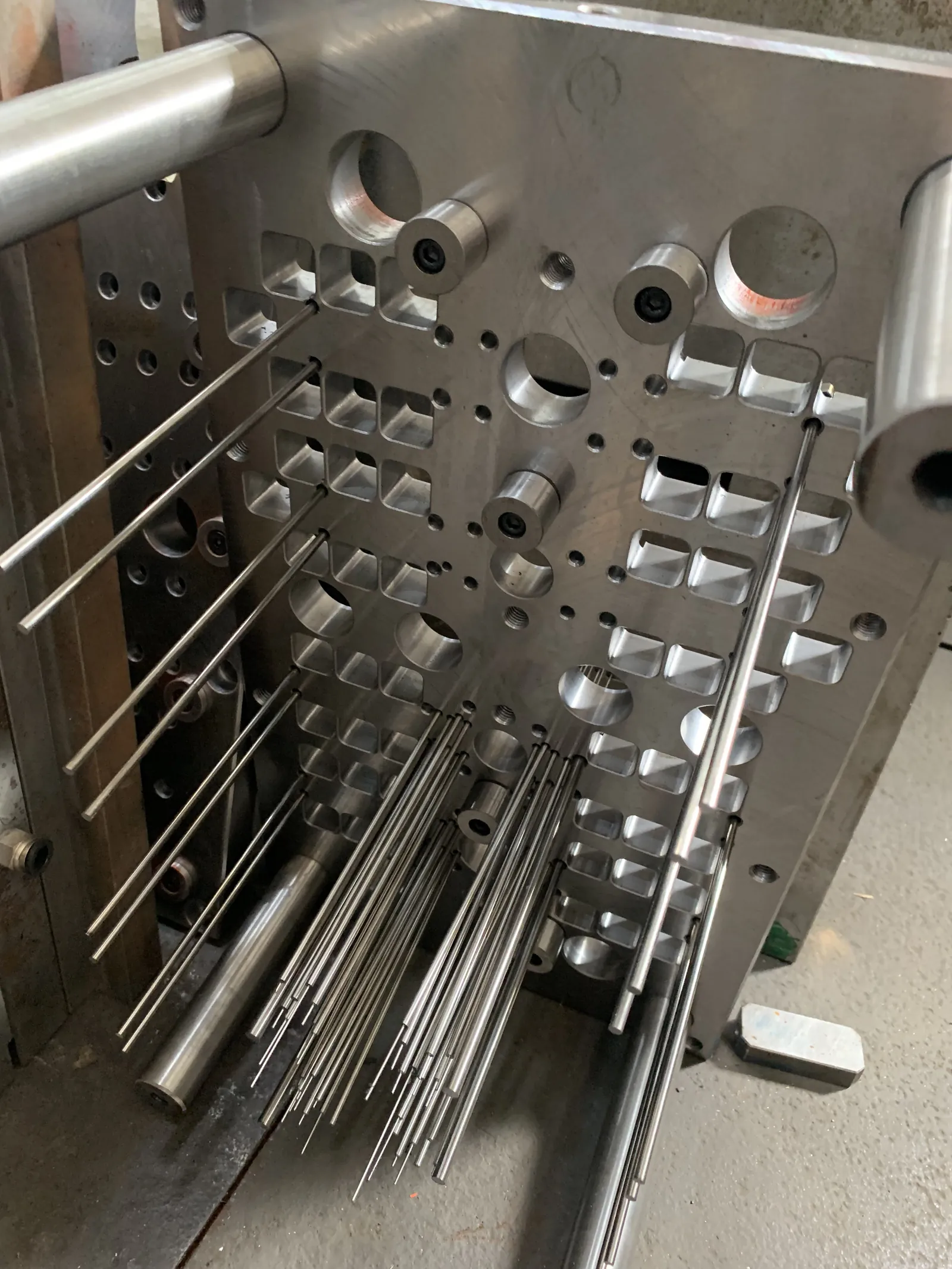
Ejection is part of the same upstream conversation. Pin positions interact with packing pressure and part distortion, so a simulation that ignores ejection only answers half the geometry. The pins on this core plate were placed against both the filling pattern and the part function before hardening. Packing time is the other half: compensation ends at gate seal, and every second past it only extends the cycle.
Limitations
The 2026 tariff figures come from a sourcing-comparison site current to October 2026 and can change with trade policy; verify the rate for your HTS code before relying on it. The resin price notices were reported by Chinese industry media and trade self-media, and we label them industry-reported — actual contract prices vary by grade and volume. The PTXPO observations come from one publication’s show-floor reports. We have no in-house before-and-after simulation case data to publish in this article, we do not name our simulation software, and the decision table is our editorial judgment rather than a validated study. None of the external numbers were measured in our shop.
What this means for your RFQ
Send the 3D model, the resin target and the annual volume, and say plainly which faces are cosmetic and which features carry load. We help procurement teams turn that input into a quotation inside 24 hours, with DFM comments attached and simulation scoped to the geometries in the table above rather than sold by default. If the analysis shows a gate move, it happens in the design phase; if the part is simple, we say so and save the line item. Either answer costs less than discovering it on the first trial shot.
Frequently asked questions
What does a mold flow analysis deliverable contain? A scoped run should report fill time and fill pattern, pressure and temperature traces, predicted seam positions, air-trap locations and, where requested, warpage and packing results. Ask for the findings as design actions – gate moves, vent additions, cooling changes – because a report without recommendations is only a picture of the problem.
When can a buyer skip simulation? On simple geometry: a single gate in an unfilled resin, generous tolerances, no cosmetic seam requirements and no thick sections. In those cases a structured DFM review of draft, wall, gate location and ejection answers the same questions at a fraction of the cost. The risk to watch is the quiet upgrade – a texture added to a face, a rib deepened for stiffness – that quietly moves the part into the order-it rows of the table.
Does a clean simulation guarantee first shots are good? No. Simulation models the melt with material data and mesh assumptions; the mould still meets real water temperature, real resin lots and real venting condition. The reliable sequence is analysis to de-risk the design, then trial shots on the press to confirm, with first-article measurement closing the loop. Treat any promise of guaranteed results as a red flag.
What should we send with the RFQ to make the analysis useful? Four things: the 3D model in STEP or IGES, the resin grade or at minimum the family and filler level, the cosmetic-face and tolerance map, and the annual volume so cavity count can be judged together with gating. Volume changes the gate strategy, and a simulation run against the wrong cavity count answers the wrong question.
Jack is part of the tooling and molding group at Hongqiang Mould, a Chinese injection mould manufacturer serving export buyers. The factory pairs DFM and simulation with in-house toolmaking: 5 CNC machining centres, EDM and grinding, 11 presses from 80 to 450 T for trials and production, and CMM inspection in a dedicated metrology room.