
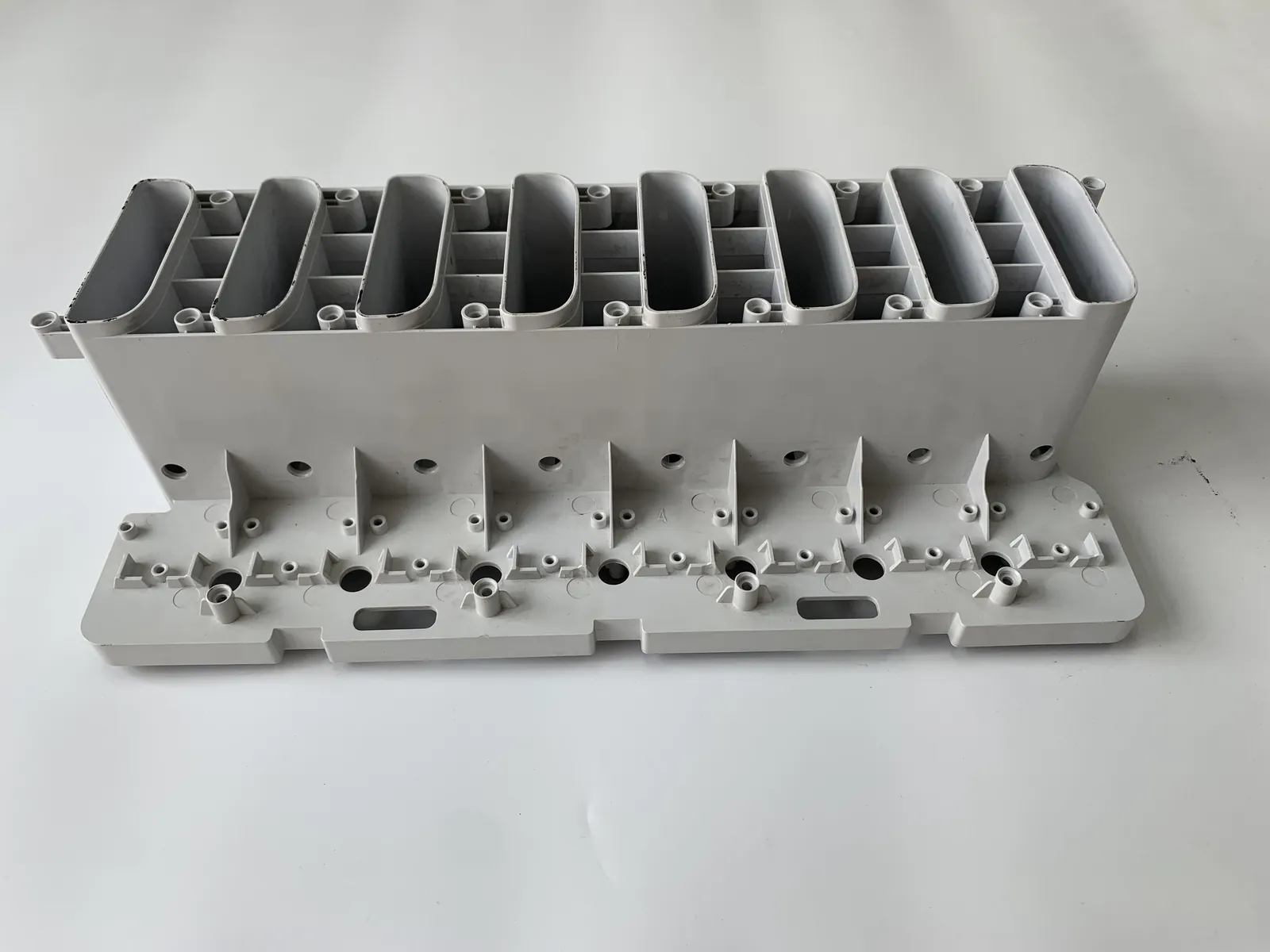
The resin brief decides the steel, not the catalogue. Glass-filled grades cut at gates and shut-offs, recycled content adds corrosion and thermal load, and each failure points to a different steel family. Name four inputs — grade, filler percentage, PCR share, annual volume — and the grade follows from evidence instead of habit.
Here is the short version. A mould built for unfilled PP and later moved to glass-filled PA wears at the gate, not the cavity wall, so hardness at the gate matters more than bulk hardness. Recycled content carries moisture and lot-to-lot variation that a polished cavity was not built for, so corrosion resistance enters the brief. Five steel directions cover most programs — pre-hardened P20/718, hardened H13, stainless S136/420, mirror NAK80 and aluminium for bridge tooling — and the RFQ decides which one applies. DFM runs before steel is ordered, so the correction happens on paper rather than at the trial press.
Key takeaways
- Wear mechanisms: 3 of them decide the steel — abrasive from fillers, corrosive from PVC/POM/flame-retardant grades, thermal fatigue from thick sections.
- Hardness: hardened H13-class sits at about 48–52 HRC (industry-typical); pre-hardened P20/718 at about 30–34 HRC does not hold up to the same filler load.
- Corrosion: PVC, POM and flame-retardant grades pit standard steels — stainless S136/420-class at about 48–54 HRC is the industry-typical answer.
- RFQ inputs: 4 lines — exact grade, filler or glass percentage, PCR share, annual volume — decide the steel before a quotation is issued.
- Quote: A quotation and DFM comments follow within a working day of the drawings arriving.
Methodology
Two things stand behind this article: the machine list we publish, and the sequence every job follows from drawing review to first trial shot. On the floor: eleven presses between 80 and 450 T, five CNC machining centres, EDM and surface grinding, a fitting bench where multi-cavity plates are assembled and checked, and a bridge CMM in the measuring room.
The numbers below fall into two distinct buckets. Shop-side facts are the ones we can evidence on request: press list, machine counts, inspection equipment. Steel-family hardness ranges are industry-typical values drawn from published steel-manual and supplier technical data, labelled as such — they are not measured in our shop. This article contains no wear-test dataset and no proprietary research; where we write “industry-typical”, that is exactly what it is.
Why does the resin brief come before the steel quote?
Resin programs move faster than steel habits. Recycled-content targets and glass-filled grades that were once specialty requests are now routine programs, and the same pattern repeats: a mould specified for one grade gets moved to another mid-program, and the tool pays for it. Shrinkage behaviour shifts, wear accelerates at gates and parting lines, and inserts get re-machined after production has started. Specifying the resin first and the steel second keeps that correction loop out of your schedule — and it is the order DFM runs in here, where draft angle, wall thickness, gating and ejection are reviewed before steel is ordered.
Which wear mechanism reaches your tool first?
Three mechanisms matter, and the resin brief tells you which one arrives first. Abrasive wear comes from fillers: glass fibres act like a fine cutting compound against cavity walls, gates and shut-offs, and the effect grows with fibre content and fibre length. Corrosive wear comes from chemistry: PVC and flame-retardant grades release aggressive vapours, while recycled blends carry trace contaminants and moisture that pit standard steels faster than virgin resin. Thermal fatigue comes from heat: engineering resins and thick sections keep cavity surfaces hot longer, and repeated cycling shows up as heat-check cracks on cores. A steel chosen against the wrong mechanism fails early, however good its certificate looks.
| Wear mechanism | Resin signal | Where it shows first | Steel direction |
|---|---|---|---|
| Abrasive wear | Glass or mineral filler in the grade | Gates, shut-offs, parting lines | Hardened H13-class, about 48–52 HRC (industry-typical) |
| Corrosive wear | PVC, POM, flame-retardant grades | Cavity walls and water lines | Stainless S136 / 420-class, about 48–54 HRC (industry-typical) |
| Thermal fatigue | Engineering resins, thick sections | Cores and hot spots | Hardened and tempered H13-class |
| Lot-to-lot variation | Post-consumer recycled (PCR) share | Surfaces across the whole cavity | Coated or stainless; re-quote the brief |
Read the table by resin, not by steel. Filler decides abrasion; chemistry decides corrosion.
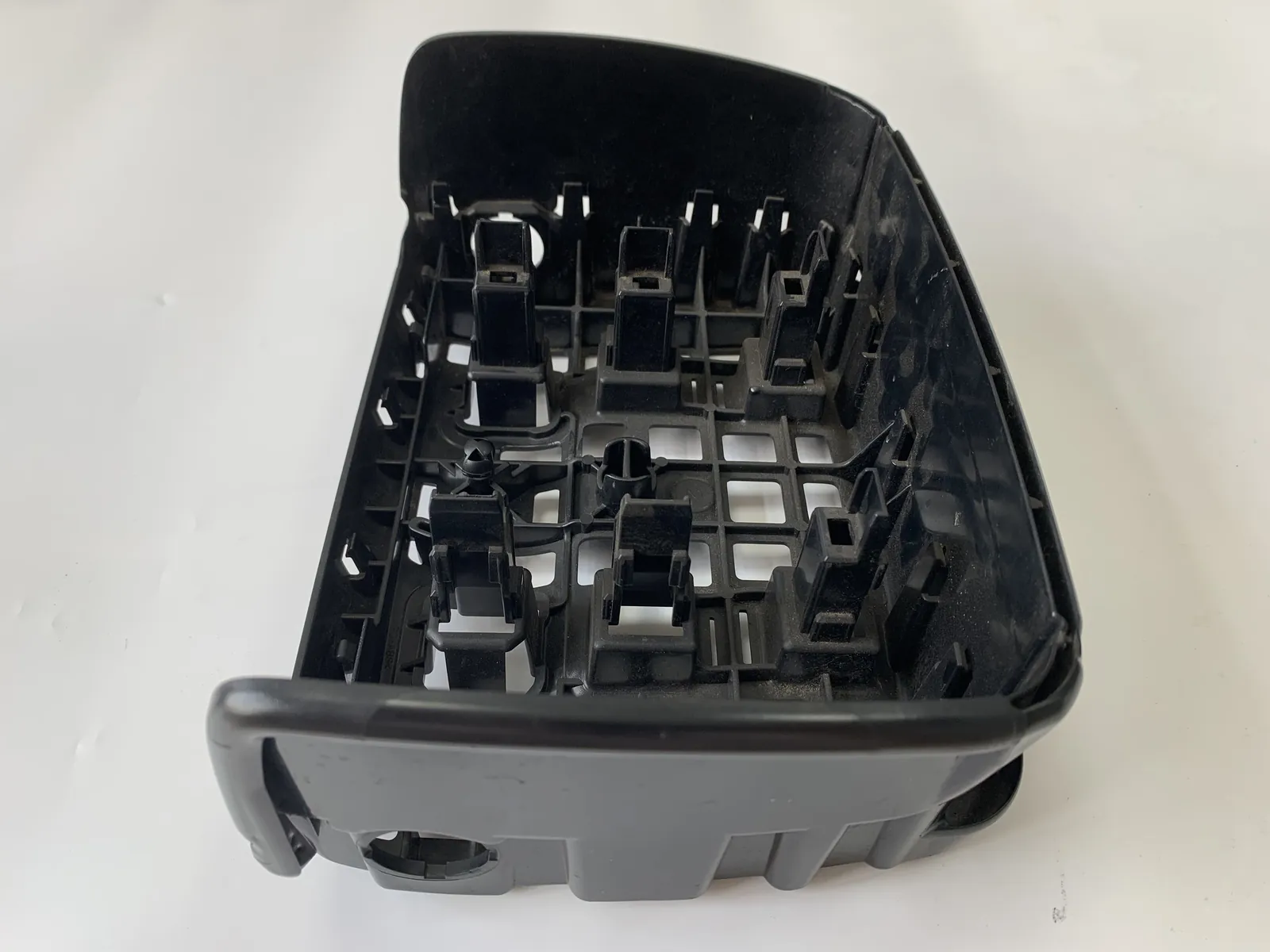
P20, H13 or S136 — which steel matches which resin?
Steel families differ in exactly the properties the resin brief stresses: hardness, corrosion resistance and polishability. The mapping below is industry-typical guidance, not site-specific data — the final grade is confirmed against your resin, volume target and surface specification during DFM, and steel certificates plus component brands are confirmed in the quotation, so what you approve is what you get.
| Resin brief | Industry-typical steel direction | Typical hardness | Why it works |
|---|---|---|---|
| Unfilled PP, PE or ABS at moderate volumes | Pre-hardened P20 / 718 class | About 30–34 HRC | Machines fast without heat treatment; adequate wear life keeps tooling cost down |
| Glass-filled PP or PA compounds | Hardened H13 class | About 48–52 HRC | Fillers abrade pre-hardened cavities early; hardened steel holds gate and parting-line detail |
| PVC, POM or flame-retardant grades | Stainless S136 / 420 class | About 48–54 HRC | Resists corrosive outgassing that pits standard steels; polishes well for medical work |
| High-gloss or cosmetic surfaces | NAK80 / S136 class | About 37–43 HRC | Polishability earns back finishing hours on visible parts |
| Prototype or bridge tooling, low volumes | Aluminium (QC-10 class) | Not hardness-rated | Cuts cost and lead time; thermal conductivity can shorten cycles |
Hardness ranges are starting points, not specifications. The heat-treatment route moves them.

What should the RFQ say about the resin?
Four lines in the RFQ prevent most of this. Add the approval standard you work to, and the DFM review has everything it needs to check draft angles, wall thickness, gating and ejection against the resin that will actually run.
| RFQ line | What to write | What it decides |
|---|---|---|
| Resin grade | The exact grade, not just “PP” | Steel family and runner layout |
| Filler or glass percentage | The percentage named on the data sheet | Whether hardened or pre-hardened steel applies |
| PCR share | Post-consumer content, if any | Corrosion resistance and whether the brief needs a re-quote |
| Annual volume | Parts per year the tool must survive | Cavity count and tool type |
Name all four and the steel decision becomes traceable. Miss one and the stage is quoted on assumptions.
Glass fibre turns a cavity into a wear surface, and recycled content adds corrosion and thermal loads that virgin resin never carries — which is why the resin brief, not the steel catalogue, should start every mould quotation.
Limitations
Performance data: the steel-and-resin mapping is directional industry guidance, not a wear test we ran on each resin. We have not published mould-life figures by steel grade, so this article gives no “shots per steel” numbers. Final grade, hardness and heat-treatment route are confirmed during DFM against your resin and volume.
Third-party information: the hardness ranges quoted — roughly 30–34 HRC for P20/718, 48–52 HRC for H13, 48–54 HRC for S136/420 and 37–43 HRC for NAK80 — are industry-typical values from published steel-manual and supplier data, not our quality records. Actual hardness varies with the heat-treatment route each supplier runs. Treat them as planning context, not as our measured values.
What this means for your RFQ
We help export buyers lock the right steel before the first trial. When the resin changes, the steel decision is revisited at DFM — not discovered at the first trial press. In our shop, plate fit and cavity alignment are settled on the fitting bench and verified against the 3D model in the CMM room, long before a trial shot. The shop behind that commitment, in numbers:
- Clamping force: 80–450 T across 11 presses
- Largest press: 450 T (JSW, with take-out robot)
- Mould machining: 5 CNC centres, EDM, surface grinding
- Inspection: bridge CMM, 2D video measurement, tensile tester
- Quotation: within 24 hours of receiving 2D/3D drawings
- Steel records: certificates and component brands confirmed in the quotation
Send your 3D drawings with the resin specification — grade, filler percentage, PCR share and annual volume — to info@hongqiangmould.com. DFM feedback and a quotation come back within 24 hours. Prefer chat? Alternatively, reach us on WhatsApp from any page, or route the package via the contact page. Resin first | Steel second | Trials clean
Frequently asked questions
Which steel should a glass-filled PA part run in? A hardened H13-class steel at roughly 48-52 HRC (industry-typical). Glass fibres behave like a fine cutting compound, and that wear concentrates at gates, shut-offs and parting lines rather than across the cavity wall, so gate hardness decides more than bulk hardness. Pre-hardened P20 at about 30-34 HRC wears early under the same filler load.
What changes once the resin carries recycled content? Corrosion resistance enters the brief. Reclaimed blends carry moisture and trace contaminants, and lot-to-lot variation shifts shrinkage between batches, so surfaces that a polished cavity was never built for begin to pit. Stainless S136 / 420-class at about 48-54 HRC is the industry-typical direction, and the brief gets re-quoted.
Do I still need P20 when my volumes are modest? Yes, provided the resin is unfilled. For PP, PE or ABS at moderate volumes, pre-hardened P20 / 718-class at about 30-34 HRC machines fast without heat treatment and holds tooling cost down. The moment the brief names a filler, a corrosive grade or a high-gloss finish, the family moves on to H13, S136/420 or NAK80-class.
How many shots will the tool survive in each steel? We publish no shots-per-steel figures. Mould-life numbers move with grade, hardness, heat-treatment route and the resin actually run, so we confirm the final grade, its hardness and the heat-treatment route during DFM against your resin and volume instead of quoting a number we cannot evidence.
Jack works on the tooling and molding team at Hongqiang Mould, where 11 presses from 80 to 450 T, 5 CNC centres and a CMM metrology room run under one roof.