
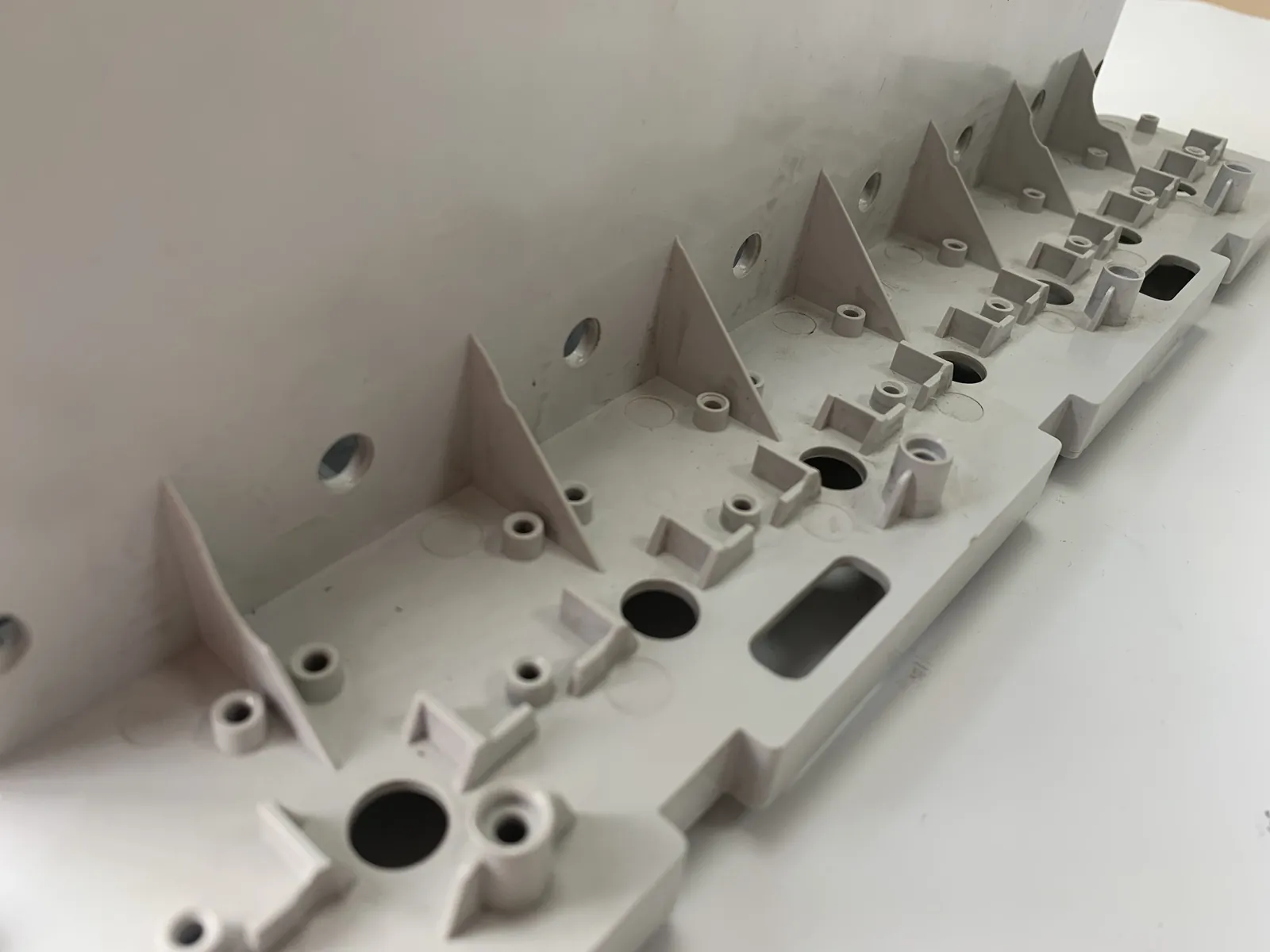
We help export buyers turn drawings into production-ready moulds. Small tools typically take about 45 days, and the clock starts at drawing review — not at your first email. Three inputs decide whether the number holds: material target, annual volume and an approval standard. Miss one and part of the schedule restarts.
A small mould at Hongqiang Mould takes about 45 days from drawing review to shipment-ready samples. The timeline runs through six stages — RFQ review, DFM and quotation within 24 hours, tool design, machining and fitting, trials with sample sign-off, then shipment — backed by our own press list — 80 to 450 T across eleven machines — five CNC machining centres and CMM-backed inspection. The three inputs above decide whether that number holds for your program.
Key takeaways
- Clock start: the 45 days begin at drawing review, so a complete package moves your start date earlier.
- Three inputs: material target, annual volume, approval standard — each missing one reopens a different stage.
- Quotation: Send drawings and the price comes back inside a working day, DFM notes included.
- Cavity count: 1+1 family tools mould two parts per cycle, scheduled per project, not ×2.
- Trial gate: samples are signed off before serial molding — 6 inspection steps run per RFQ agreement.
Methodology
This timeline follows the sequence we run in the shop; the stage list and the 45-day figure were re-checked against the molding-services page on 2026-10-08. A complete package gets a quotation back inside 24 hours — that commitment is standing. What the shop can show on request: eleven presses spanning 80 to 450 T, five CNC machining centres, EDM and surface grinding, and a bridge CMM in the inspection room.
Two kinds of figures appear below, and they are not equivalent. Anything we can prove on request — the press list, machine counts, inspection equipment — counts as a shop fact. Where a number comes from published industry sources it is labelled industry-typical, and none of those numbers were taken on our machines. We ran no sampling study for this article and keep no proprietary dataset behind it — the label means what it says.
What fills the 45 days?
The quoted number covers a sequence, and each stage has an owner on both sides. You supply drawings and decisions; we supply engineering, machining, trials and inspection. The table below is the structure we quote against.
| Stage | What you supply | What sets the duration |
|---|---|---|
| RFQ & drawing review | 2D/3D drawings, material target, annual volume | How complete the drawing package is |
| DFM & quotation | Approval standard named in the RFQ | Depth of feedback on draft, wall thickness, gating, ejection |
| Tool design | Sign-off cycle | Number of review rounds before approval |
| Steel ordering & machining | Steel grade and component brands confirmed in the quotation | Steel availability and machining content |
| Fitting & assembly | — | Detail count, EDM and grinding workload |
| Trials & sampling | Sample sign-off criteria | Press availability and trial iterations |
| Shipment | Export packing requirements | Destination and packing specification |
Most stages run inside one factory. Steel is cut only after DFM and design sign-off.
Which three inputs restart the clock?
Three inputs restart part of the schedule more often than any machining problem. The material target decides which tool steel and runner layout make sense, so it sits ahead of the quotation. The annual volume decides whether a single-cavity or multi-cavity tool is the right build, so it sits ahead of tool design. The approval standard decides what documentation the trials must produce, so it sits ahead of sampling. Leave one out and that stage is quoted on assumptions.
| Input missing | What reopens | Where the days go |
|---|---|---|
| Material target | Steel grade and runner layout choice | DFM and quotation restart |
| Annual volume | Cavity count and tool type decision | Tool design restart |
| Approval standard | Trial documentation scope | Trials and sampling restart |
| All three supplied | Nothing reopens | Clock runs from drawing review |
Each restart is project-specific, so it is quoted per project. No fixed surcharge applies.
Industry-typical figures show why the upstream work matters. Published industry sources put medium-complexity tools at 2–4 trial-and-modify rounds, with roughly 60% of first trials needing at least one rework — industry-typical, not measured in our shop. Our control is upstream: multi-cavity plates are assembled and checked on the fitting bench before the mould reaches a trial press.
Does cavity count stretch the schedule?
Single and multi-cavity tools, two-shot (2K) moulds for multi-material parts, hot runner systems and stack moulds for thin-wall high-cavity programs are all built here. Each adds machining and fitting workload rather than a fixed surcharge — which is why larger and multi-cavity tools are scheduled per project and confirmed in the quotation instead of being quoted as a multiple of the small-tool number.
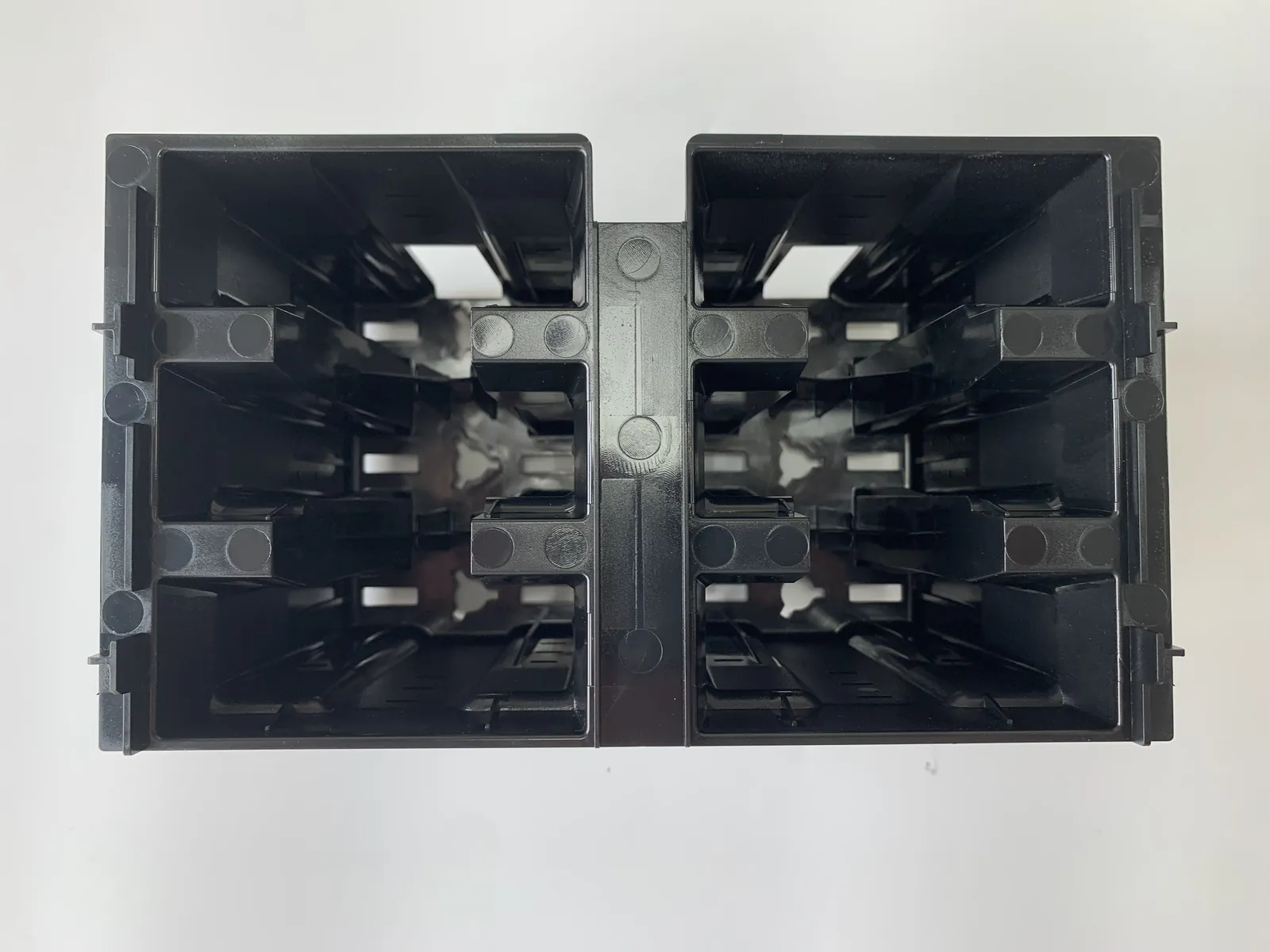
A 1+1 family tool moulds two different parts in one cycle. That can beat running two single-cavity tools, and it is decided at tool design — before steel is ordered. The boundary: cavity count is settled with your volume figure, not discovered at the trial press.
What does the clock mean for your first purchase order?
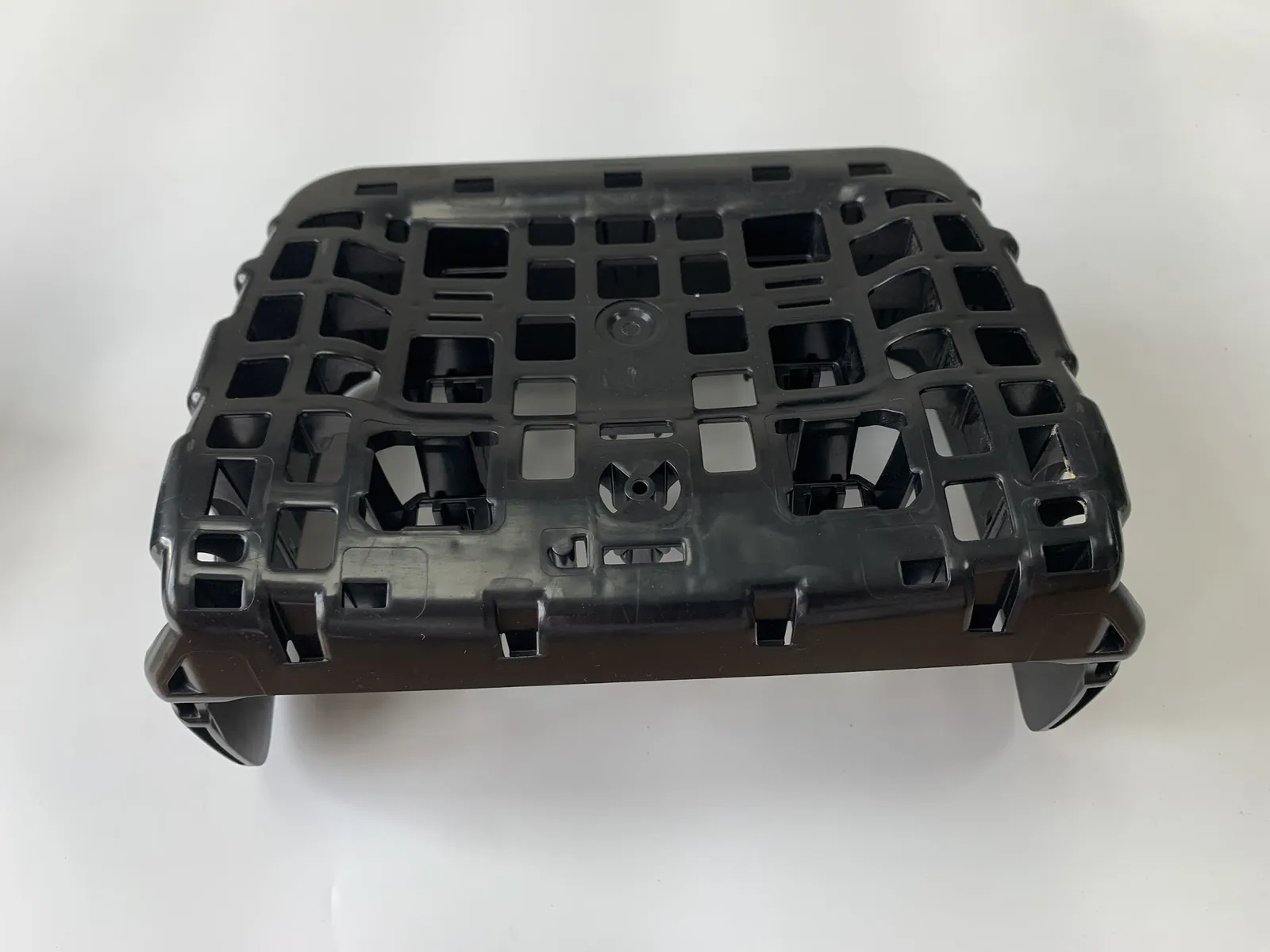
Trials end with your sign-off on samples. Serial molding then runs on 11 presses from 80 to 450 tons clamping force, matched to the tool and material, with processing parameters recorded per batch so repeat orders stay traceable. Degating, finishing, printing and simple assembly keep parts shipment-ready from one supplier. Between runs, customer moulds are stored and maintained here, so the second order starts from a serviced tool.
Limitations
Performance data: the 45-day figure is a typical value for small moulds quoted against a complete RFQ package. Larger and multi-cavity tools are scheduled per project. We have not published a stage-by-stage statistical breakdown, so the table above describes structure, not measured day-level averages.
Third-party information: the trial-round figures in this article — 2–4 rounds and the roughly 60% first-trial rework rate — come from published industry sources, not from our quality records. Treat them as context for planning, not as our performance data.
What this means for your RFQ
A 45-day quote is a schedule commitment, and you control where the clock starts. We help export buyers hold tooling schedules by settling the three inputs before steel is cut. What that schedule commitment rests on, in figures:
- Press range: 11 machines, 80–450 T clamping force
- Biggest machine: 450 T JSW, served by a take-out robot
- Mould machining: five CNC centres plus EDM and surface grinding
- Inspection kit: bridge CMM, 2D video measuring, tensile testing
- Quotation: within 24 hours of receiving 2D/3D drawings
- Small-mould lead time: about 45 days typical, quoted per project
Send your 2D/3D drawings, material target and annual volume, and the clock starts cleanly. Quote back within 24 hours. DFM feedback lands before steel is cut. Fastest route: the WhatsApp button sits on any page, or pass the package through the contact page. One RFQ | One clock | One roof.
Frequently asked questions
When does the 45-day lead time actually start? At drawing review – not at your first email and not at the purchase order. A complete package of 2D/3D drawings, material target and annual volume starts the clock on the day we review it. Anything missing postpones the start, because the stage it feeds is then quoted on assumptions.
Which inputs can restart part of the schedule? Three of them, and none is a machining problem: the material target, the annual volume and the approval standard. Each feeds a different stage, so leaving one out reopens that stage – DFM and quotation, tool design, or trials. Supply all three and nothing restarts.
Do you quote a multi-cavity tool as a multiple of the single-cavity price? No. Extra cavities add machining and fitting workload rather than a fixed multiplier, so two-shot, hot-runner and stack moulds are scheduled per project and confirmed in the quotation. A 1+1 family tool that moulds two parts per cycle can still beat two single-cavity tools, and that call is made at tool design.
What happens between the trial and shipment? Your sign-off on samples comes before serial molding, so the trial gate is your approval, not ours. Six inspection steps run per the RFQ agreement, and packing follows the specification you name. Serial production on the eleven machines spanning 80 to 450 T starts only after that sign-off.